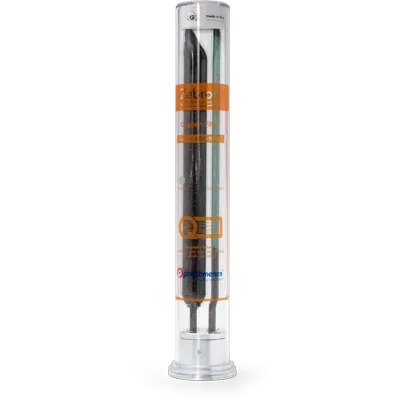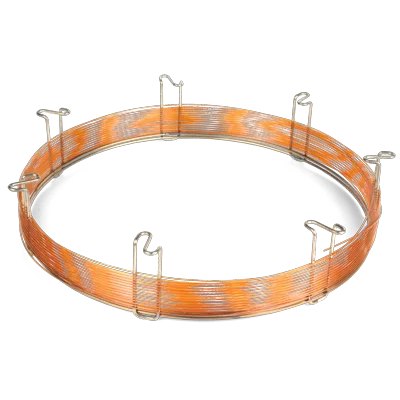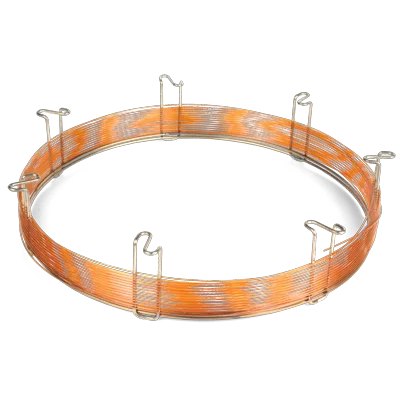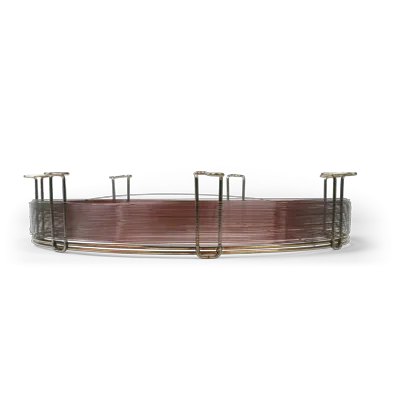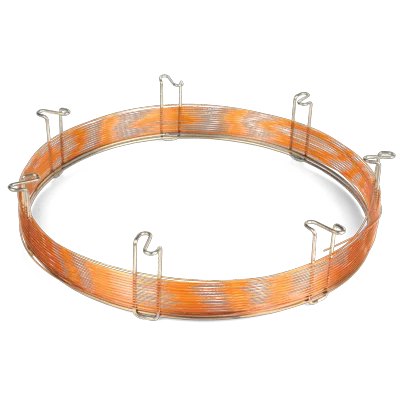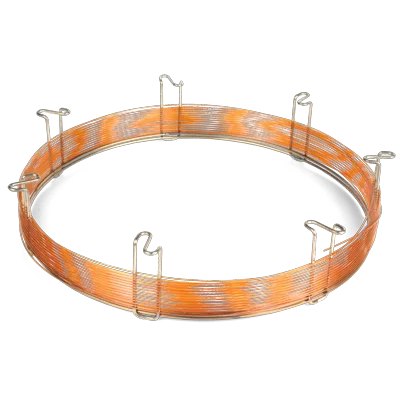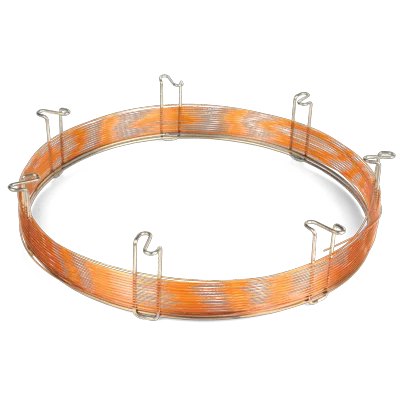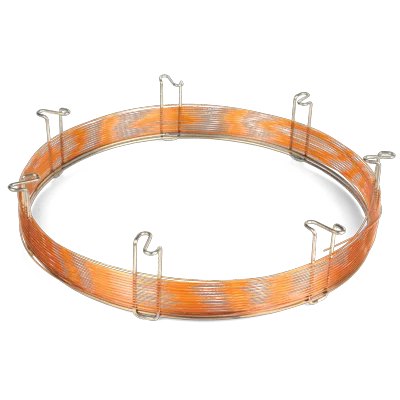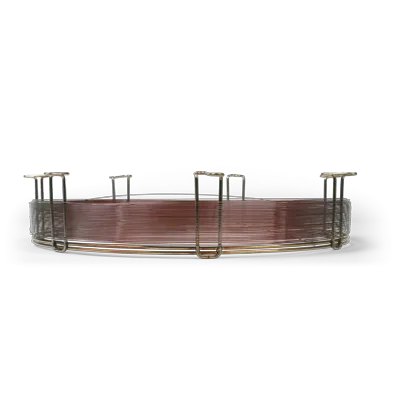
Zebron ZB-SemiVolatiles GC Columns
Enviro-Inert™ Technology: A New Generation In Environmental Testing
Terms and Conditions
30-day money-back guarantee
Shipping: 2-3 Business Days
Zebron ZB-Semivolatiles GC Columns
A New Generation of Performance for Semi-Volatiles Analysis
5 Reasons Chromatographers Love It
- Delivers supreme inertness for acids, amines, and other notoriously active compounds
- Hold calibrations and increase productivity up to 58%
- Detect down to ultra low levels (0.2 ng on column)
- Improve critical pair resolution (valley height 9.9% for benzo[b] and benzo[k])
- The most popular choice for testing of semivolatiles, PAHs, and PBDEs
Recommended Use
Semivolatiles (SVOCs), PAHs, PBDEs, EPA Methods (525, 610, 625, 8100, 8270D)
Overview
Upgrade to Zebron from any 5 %-phenyl or 5 % phenyl-arylene / 95 % dimethylpolysiloxane phase:
Agilent® | Restek® | Supelco® | |
|---|---|---|---|
DB®-5ms | HP-5ms | Rxi®-5Sil MS | SLB®-5ms |
| DB-5ms Ultra Inert | HP-5ms Ultra Inert | Rxi-5ms | |
| DB-5.625 | VP-5ms | ||
| DB-UI 8270D | CP-5il 8 CB MS |
Enviro-Inert™ Technology: A New Generation In Environmental Testing
Why Is Reduced Activity Important?
Poor inertness as a result of increased column activity can lead to low acid/base sensitivity or analyte misidentification, causing incorrect data and big headaches! ZB-SemiVolatiles is designed with new Enviro-Inert technology to ensure:
- Inert, rugged performance without compromising separation
- Improved resolution of key critical pairs like Benzo[b]fluoranthene and Benzo[k]fluoranthene
- Better peak shapes and response for acids, amines, and PAHs
Enviro-Inert Technology Improves Inertness Without Changing Selectivity
You Spoke, You Tested, You Approved
Your input fueled the research and development of Zebron ZB-SemiVolatiles – the column specifically designed to overcome your EPA Method 8270D obstacles. Several environmental labs have verified real-world performance on ZB-SemiVolatiles:
- TestAmerica Laboratories, Inc. Buffalo
- Phoenix Environmental Laboratories, Inc.
- Other labs like yours!
“Zebron ZB-SemiVolatiles is a very stable and durable semi-volatile column. This has reduced TestAmerica’s downtime and increased our productivity, enabling us to better serve our clients’ needs.”
David Wilkes, GC-MS Semi-Volatile Department
TestAmerica Laboratories, Inc. Buffalo
The opinions stated herein are solely those of the speaker and not necessarily those of any company or organization.
We QC Test for the SVOC Compounds You Analyze
We take the guesswork out of meeting method requirements by aggressively testing ZB-SemiVolatiles with two different test mixes. We incorporated troublesome analytes from your samples (Pyridine) and compounds in the 8270D tuning standard (DDT, Pentachlorophenol, and Benzidine) into our QC test, so you can be sure your column is ready to meet suitability requirements for the method.
Test Probe / Criteria | Pyridine (PYR) Very active amine – exposes any basic activity | |
|---|---|---|
EPA 8270D Requirement | Our Requirement | |
Peak Response: | Not Specified | ≥ 0.6* |
| Pentachlorophenol (PCP) PCP peaks disappear and exhibit tailing on columns with acid activity | ||
|---|---|---|
EPA 8270D Requirement | Our Requirement | |
Peak Skew: | ≤ 2.0 | ≤ 2.0 |
Peak Response: | Not Specified | ≥ 0.3 |
| Benzidine Active amine that tails when basic activity is present | ||
|---|---|---|
EPA 8270D Requirement | Our Requirement | |
Peak Skew: | ≤ 2.0 | ≤ 2.0 |
| DDT Breaks down in an active system to DDE & DDD | ||
|---|---|---|
EPA 8270D Requirement | Our Requirement | |
Breakdown: | < 20 % | < 20 % |
*Requirement of 0.5 for 60 m x 0.25 mm x 0.25 µm and 10 m Guardian™ dimensions
Competitor Columns Put to Our Test
Our QC test exposed poor performance for key compounds on competing columns. Enviro-Inert™ technology improves inertness, so you experience increased responses, lower limits of detection (LOD), and virtually no breakdown when using a ZB-SemiVolatiles GC column.
A New Generation of Performance for Semi-Volatiles Analysis
Conditions were the same for all columns tested. Comparative separations may not be representative of all applications.
Conditions for all columns:
Dimension: | 30 meter x 0.25 mm x 0.25 µm |
Detector: | FID @ 325 °C |
Injection: | Split 100:1 @ 175 °C, 1 µL |
Carrier Gas: | Hydrogen @ 40 cm/sec (constant pressure) |
Oven Program: | 40 °C for 2 min to 300 °C @ 15 °C/min for 3.5 min |
Sample:
Analytes are 20 ppm in Dichloromethane
1. Pyridine
2. Pentachlorophenol
3. DFTPP
4. Benzidine
5. DDT
6. DDD
Why Is Pyridine Response Important?
Pyridine is a very active amine and a good indicator for both column lifetime and sensitivity. Columns with higher initial peak responses can be expected to maintain performance over time. Additionally, higher responses allow you to run at lower levels of detection, improving the sensitivity of your analysis.
Competing Columns Fail Our Stringent QC Requirements
As part of our QC requirements, columns must meet minimum Pyridine and Pentachlorophenol responses. Each of the four competitor columns would have been failed by our QC department and would not have shipped to our customers.
QC Test Mix Results: Pyridine and PCP Response Levels
Conditions were the same for all columns tested. Comparative separations are not representative of all applications.
Response Factor (RF)
Agilent | PYR | PCP |
|---|---|---|
| ZB-SemiVolatiles | 1.06 | 0.37 |
| Rxi-5ms | 0.34 | 0.34 |
| Rxi-5Sil MS | 0.53 | 0.26 |
| HP-5ms Ultra Inert | 0.28 | 0.40 |
| DB-5ms Ultra Inert | 0.66 | 0.20 |
RF is calculated by dividing peak height of analyte by peak of height of DFTPP as internal standard.
Great Resolution of Key Critical Pairs and Improved Peak Shapes
Enviro-Inert™ technology allows Zebron ZB-SemiVolatiles to provide improved productivity with shorter run times for SVOC methods, while maintaining resolution of key critical pairs.
EPA Method 8270D: SemiVolatile Organic Compounds
Columns: | Zebron ZB-SemiVolatiles |
Dimension: | 30 meter x 0.25 mm x 0.25 µm |
Detector: | MSD @ 340 °C; 45 – 450 amu |
Part No.: | 7HG-G027-11 |
Injection: | Split 10:1 @ 280 °C, 1 µL |
Carrier Gas: | Helium @ 1.4 mL/min (constant flow) |
Oven Program: | 40 °C for 0.5 min to 260 °C @ 40 °C/min to 295 °C @ 6 °C/min to 325 °C @25 °C/min for 2 min |
Liner: | AG0-8499 (Single Taper with Wool) |
Septum: | AG0-4697 (PhenoRed™ 400) |
Inlet Seal: | AG0-8620 (Easy Seals™ Inlet Base Seal) |
Sample: | Analytes are 25 ppm in Dichloromethane135 compounds in EPA Method 8270D |
Improved Peak Shapes
Documents
- Guide: Persistent Organic Pollutants (POPs) by GC
- Brochures: Phenova CRMs for Environmental Analysis Brochure
- Guide: GC Troubleshooting Quick Reference Guide
- Guide: Zebron GC Column Selection Chart
- Brochures: Zebron Gas Management Brochure
- Supporting Docs: Zebron Gas Filter User Guide
- Technical Notes: EPA Method 8270D by GC (TN-2050)
- Supporting Docs: Zebron Gas Filter Selection Tool
- Brochures: Advanced Pesticide Testing Using Zebron GC Columns
- Technical Notes: Single-Run Analysis of PBDEs Including BDE-209 on Zebron ZB-SemiVolatiles (TN-2054)
- Brochures: Complete GC Solutions for Pesticides and Semi-Volatiles Testing
- Brochures: Zebron ZB-SemiVolatiles GC Columns
FAQs
Can I pack or re-pack my GC liner with wool?
Though the upfront cost of self-packing your liner may seem attractive, the time and headaches caused by resulting tailing or irreproducible peaks can be sizeable! Self-packed wool fibers commonly break during installation and any existing deactivation on the liner can also be scratched or damaged. Scratches in the deactivation layer are likely to occur when removing wool from the liner or re-packing it with new wool. Also, when wool is forcefully inserted or removed, these scratches could expose active sites, resulting in peak tailing and poor reproducibility. Pre-packed Zebron PLUS liners undergo the deactivation process with the quartz wool already in place, which ensures that any active sites that form during packing are not exposed. Its novel touchless packaging and preinstalled O-ring prevent contamination during installation.
Does the Zebron PLUS liner with wool improve my GC column lifetime?
Yes. Zebron PLUS liners are packed with quartz wool, which serves two purposes: a) Quartz wool promotes homogenous vaporization of analytes and solvent in the inlet to effectively transfer them to the head of the GC column. b) Quartz wool acts as a filter, trapping non-volatile impurities and preventing them from proceeding further into the GC column.
I work with dirty samples which produce a residue on my GC liner after approximately 100 injections. Can I scrub/sonicate my liner and reuse it?
It is not recommended to scrub/sonicate your liners. Residue formation indicates contamination. More specifically, this shows that the sample contains non-volatile impurities, in which case it is recommended to replace your liner rather than clean it. Sonication can alter the liner’s deactivation, and scrubbing can create scratches and active sites. As a result, you can have several chromatography problems such as poor quantitation, analyte breakdown, poor reproducibility, peak asymmetry, etc.
Is there a way I can get immediate help with my current and upcoming method?
Absolutely, we're always here to help! You can easily get in contact with our team members by clicking contact us on the menu or better yet, just head to www.phenomenex.com/chatnow and we'll help you out with method recommendations and tips.
I am using an inert GC column for my analysis, and I still see peak tailing. What could be the reason for this?
For analysis of active compounds, it is crucial to use both a highly inert column and a highly inert liner. The liner is the first place of potential analyte interaction during GC analysis; it is important that your analytes are not adsorbed. Zebron PLUS liners undergo a rigorous deactivation process and are tested for inertness to ensure reliable results when working with highly active compounds such as underivatized acids and active bases.
When facing peak and resolution issues in sample analysis by GC, where is the best place to start?
The inlet is the most common place where problems happen in gas chromatography. This is because: • The inlet is subjected to very high temperatures. • There are multiple consumables involved in the inlet that need routine maintenance. • Some inlet modes, such as splitless injection, are a slow process, meaning that target analytes and the inlet can interact with each other before the sample enters the column.
Can you recommend a GC liner that work best when analyzing dirty samples, samples with wide boiling points, or samples with wide molecular weight?
Analysis of dirty samples, samples with wide boiling points, or samples with wide molecular weights can be enhanced by choosing a Zebron™ PLUS liner with quartz wool. Liners packed with wool can prevent non-volatile compounds from entering the column and improve sample vaporization for a more robust, reproducible analysis.
Manufacturer information: Zebron ZB-Semivolatiles GC Columns – Phenomenex (USA). MAS Brand is the official representative of Phenomenex in Egypt.
Specifications for Zebron ZB-SemiVolatiles GC Columns
| GC Length (m) | 15 or 20 or 30 or 60 |
| GC Internal Diameter (mm) | 0.18 or 0.25 or 0.32 |
| GC Film Thickness (µm) | 0.18 or 0.25 or 0.36 or 0.5 |
| GC Format | Guard Column or Capillary Column or 5-inch Cage |
| GC Option | Standard or w/ GUARDIAN 5 m, Custom or w/ GUARDIAN 10 m or w/ GUARDIAN 5 m or Reverse Winding |
| Manufacturer | Phenomenex |
| GC Phase | ZB-SemiVolatiles |