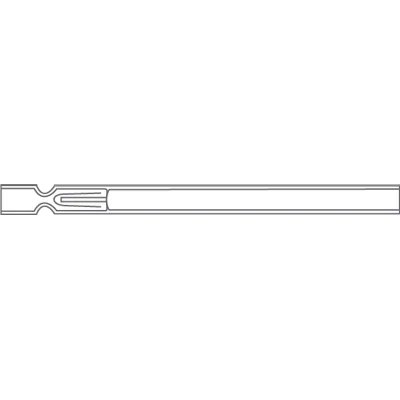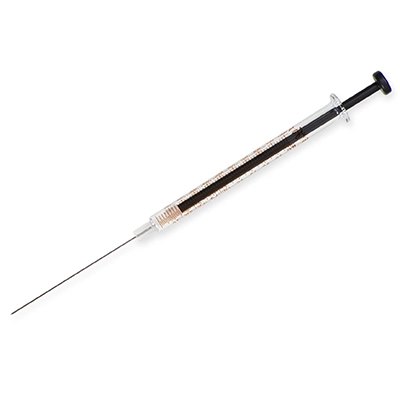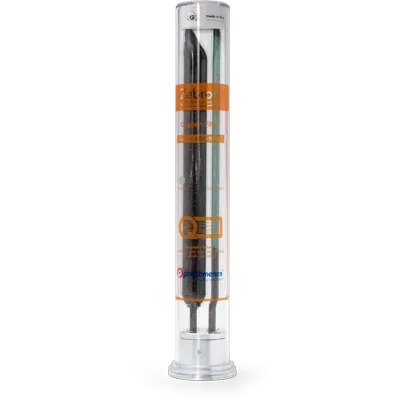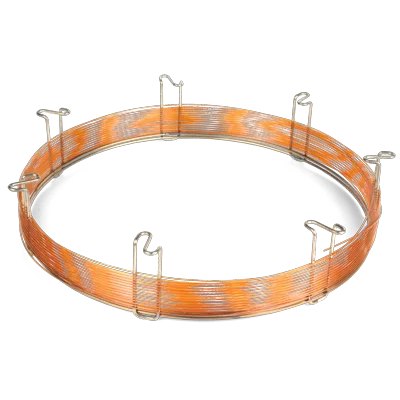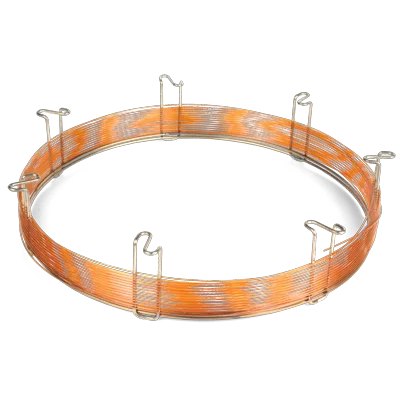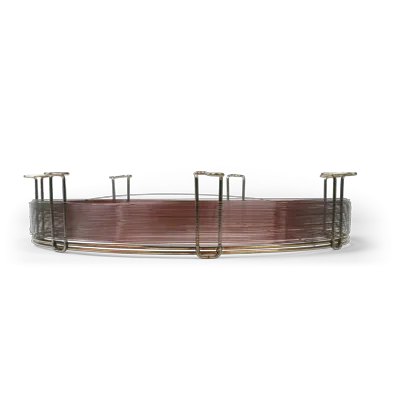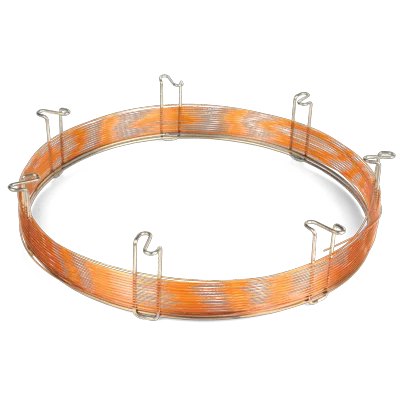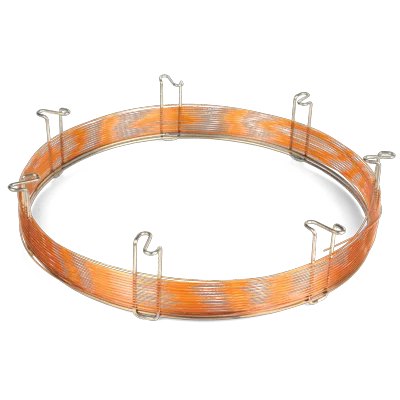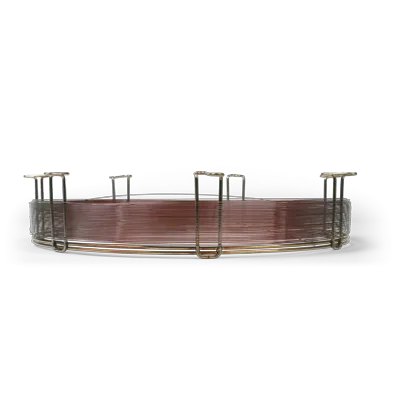
Zebron ZB-SemiVolatiles GC Columns
تقنية Enviro-Inert™: جيل جديد في الاختبارات البيئية
الشروط والأحكام
30-day money-back guarantee
Shipping: 2-3 Business Days
Zebron ZB-Semivolatiles GC Columns
جيل جديد من الأداء لتحليل المركبات شبه المتطايرة
5 أسباب تجعل المحللين يحبونه
- خمول فائق للأحماض والأمينات والمركبات المعروفة بنشاطها
- الحفاظ على المعايرة وزيادة الإنتاجية حتى 58%
- كشف حتى مستويات منخفضة جدًا (0.2 نانوجرام على العمود)
- فصل أفضل للأزواج الحرجة (ارتفاع الوادي 9.9% بين benzo[b] وbenzo[k])
- الاختيار الأكثر شيوعًا لتحليل المركبات شبه المتطايرة والـ PAHs والـ PBDEs
الاستخدام الموصى به
المركبات شبه المتطايرة (SVOCs)، PAHs، PBDEs، طرق EPA (525 و610 و625 و8100 و8270D)
نظرة عامة
Upgrade to Zebron from any 5 %-phenyl or 5 % phenyl-arylene / 95 % dimethylpolysiloxane phase:
Agilent® | Restek® | Supelco® | |
|---|---|---|---|
DB®-5ms | HP-5ms | Rxi®-5Sil MS | SLB®-5ms |
| DB-5ms Ultra Inert | HP-5ms Ultra Inert | Rxi-5ms | |
| DB-5.625 | VP-5ms | ||
| DB-UI 8270D | CP-5il 8 CB MS |
تقنية Enviro-Inert™: جيل جديد في التحاليل البيئية
Why Is Reduced Activity Important?
Poor inertness as a result of increased column activity can lead to low acid/base sensitivity or analyte misidentification, causing incorrect data and big headaches! ZB-SemiVolatiles is designed with new Enviro-Inert technology to ensure:
- Inert, rugged performance without compromising separation
- Improved resolution of key critical pairs like Benzo[b]fluoranthene and Benzo[k]fluoranthene
- Better peak shapes and response for acids, amines, and PAHs
Enviro-Inert Technology Improves Inertness Without Changing Selectivity
You Spoke, You Tested, You Approved
Your input fueled the research and development of Zebron ZB-SemiVolatiles – the column specifically designed to overcome your EPA Method 8270D obstacles. Several environmental labs have verified real-world performance on ZB-SemiVolatiles:
- TestAmerica Laboratories, Inc. Buffalo
- Phoenix Environmental Laboratories, Inc.
- Other labs like yours!
“Zebron ZB-SemiVolatiles is a very stable and durable semi-volatile column. This has reduced TestAmerica’s downtime and increased our productivity, enabling us to better serve our clients’ needs.”
David Wilkes, GC-MS Semi-Volatile Department
TestAmerica Laboratories, Inc. Buffalo
The opinions stated herein are solely those of the speaker and not necessarily those of any company or organization.
We QC Test for the SVOC Compounds You Analyze
We take the guesswork out of meeting method requirements by aggressively testing ZB-SemiVolatiles with two different test mixes. We incorporated troublesome analytes from your samples (Pyridine) and compounds in the 8270D tuning standard (DDT, Pentachlorophenol, and Benzidine) into our QC test, so you can be sure your column is ready to meet suitability requirements for the method.
Test Probe / Criteria | Pyridine (PYR) Very active amine – exposes any basic activity | |
|---|---|---|
EPA 8270D Requirement | Our Requirement | |
Peak Response: | Not Specified | ≥ 0.6* |
| Pentachlorophenol (PCP) PCP peaks disappear and exhibit tailing on columns with acid activity | ||
|---|---|---|
EPA 8270D Requirement | Our Requirement | |
Peak Skew: | ≤ 2.0 | ≤ 2.0 |
Peak Response: | Not Specified | ≥ 0.3 |
| Benzidine Active amine that tails when basic activity is present | ||
|---|---|---|
EPA 8270D Requirement | Our Requirement | |
Peak Skew: | ≤ 2.0 | ≤ 2.0 |
| DDT Breaks down in an active system to DDE & DDD | ||
|---|---|---|
EPA 8270D Requirement | Our Requirement | |
Breakdown: | < 20 % | < 20 % |
*Requirement of 0.5 for 60 m x 0.25 mm x 0.25 µm and 10 m Guardian™ dimensions
Competitor Columns Put to Our Test
Our QC test exposed poor performance for key compounds on competing columns. Enviro-Inert™ technology improves inertness, so you experience increased responses, lower limits of detection (LOD), and virtually no breakdown when using a ZB-SemiVolatiles GC column.
جيل جديد من الأداء لتحليل المركبات شبه المتطايرة
Conditions were the same for all columns tested. Comparative separations may not be representative of all applications.
Conditions for all columns:
Dimension: | 30 meter x 0.25 mm x 0.25 µm |
Detector: | FID @ 325 °C |
Injection: | Split 100:1 @ 175 °C, 1 µL |
Carrier Gas: | Hydrogen @ 40 cm/sec (constant pressure) |
Oven Program: | 40 °C for 2 min to 300 °C @ 15 °C/min for 3.5 min |
Sample:
Analytes are 20 ppm in Dichloromethane
1. Pyridine
2. Pentachlorophenol
3. DFTPP
4. Benzidine
5. DDT
6. DDD
Why Is Pyridine Response Important?
Pyridine is a very active amine and a good indicator for both column lifetime and sensitivity. Columns with higher initial peak responses can be expected to maintain performance over time. Additionally, higher responses allow you to run at lower levels of detection, improving the sensitivity of your analysis.
Competing Columns Fail Our Stringent QC Requirements
As part of our QC requirements, columns must meet minimum Pyridine and Pentachlorophenol responses. Each of the four competitor columns would have been failed by our QC department and would not have shipped to our customers.
QC Test Mix Results: Pyridine and PCP Response Levels
Conditions were the same for all columns tested. Comparative separations are not representative of all applications.
Response Factor (RF)
Agilent | PYR | PCP |
|---|---|---|
| ZB-SemiVolatiles | 1.06 | 0.37 |
| Rxi-5ms | 0.34 | 0.34 |
| Rxi-5Sil MS | 0.53 | 0.26 |
| HP-5ms Ultra Inert | 0.28 | 0.40 |
| DB-5ms Ultra Inert | 0.66 | 0.20 |
RF is calculated by dividing peak height of analyte by peak of height of DFTPP as internal standard.
Great Resolution of Key Critical Pairs and Improved Peak Shapes
Enviro-Inert™ technology allows Zebron ZB-SemiVolatiles to provide improved productivity with shorter run times for SVOC methods, while maintaining resolution of key critical pairs.
EPA Method 8270D: SemiVolatile Organic Compounds
Columns: | Zebron ZB-SemiVolatiles |
Dimension: | 30 meter x 0.25 mm x 0.25 µm |
Detector: | MSD @ 340 °C; 45 – 450 amu |
Part No.: | 7HG-G027-11 |
Injection: | Split 10:1 @ 280 °C, 1 µL |
Carrier Gas: | Helium @ 1.4 mL/min (constant flow) |
Oven Program: | 40 °C for 0.5 min to 260 °C @ 40 °C/min to 295 °C @ 6 °C/min to 325 °C @25 °C/min for 2 min |
Liner: | AG0-8499 (Single Taper with Wool) |
Septum: | AG0-4697 (PhenoRed™ 400) |
Inlet Seal: | AG0-8620 (Easy Seals™ Inlet Base Seal) |
Sample: | Analytes are 25 ppm in Dichloromethane135 compounds in EPA Method 8270D |
Improved Peak Shapes
المستندات
- Guide: Persistent Organic Pollutants (POPs) by GC
- Brochures: Phenova CRMs for Environmental Analysis Brochure
- Guide: GC Troubleshooting Quick Reference Guide
- Guide: Zebron GC Column Selection Chart
- Brochures: Zebron Gas Management Brochure
- Supporting Docs: Zebron Gas Filter User Guide
- Technical Notes: EPA Method 8270D by GC (TN-2050)
- Supporting Docs: Zebron Gas Filter Selection Tool
- Brochures: Advanced Pesticide Testing Using Zebron GC Columns
- Technical Notes: Single-Run Analysis of PBDEs Including BDE-209 on Zebron ZB-SemiVolatiles (TN-2054)
- Brochures: Complete GC Solutions for Pesticides and Semi-Volatiles Testing
- Brochures: Zebron ZB-SemiVolatiles GC Columns
الأسئلة الشائعة
هل يمكنني تعبئة أو إعادة تعبئة بطانة GC بالصوف بنفسي؟
رغم أن التكلفة المبدئية لتعبئة البطانة بنفسك قد تبدو مغرية، فإن الوقت والمتاعب الناتجة عن ذيل القمم أو عدم تكرارها قد تكون كبيرة! فألياف الصوف المعبأة يدويًا تنكسر غالبًا أثناء التركيب، وقد تُخدش طبقة التخميل الموجودة على البطانة أو تتلف، خصوصًا عند إزالة الصوف أو إعادة تعبئته. وعند إدخال الصوف أو إخراجه بالقوة قد تكشف هذه الخدوش مواقع نشطة فيظهر ذيل القمم وتضعف التكرارية. أما بطانات Zebron PLUS المعبأة مسبقًا فتمر بعملية التخميل والصوف في مكانه، فلا تنكشف أي مواقع نشطة تتكون أثناء التعبئة، كما أن تغليفها الجديد الذي لا يحتاج لمس وحلقة O-ring المركّبة مسبقًا يمنعان التلوث أثناء التركيب.
هل تطيل بطانة Zebron PLUS بالصوف عمر عمود GC؟
نعم. بطانات Zebron PLUS معبأة بصوف الكوارتز الذي له وظيفتان: أ) يساعد على التبخير المتجانس للمواد والمذيب في المدخل لنقلها بفعالية إلى رأس عمود GC. ب) يعمل كفلتر يحتجز الشوائب غير المتطايرة ويمنعها من الدخول إلى عمود GC.
أعمل بعينات متسخة تترك بقايا على بطانة GC بعد حوالي 100 حقنة. هل يمكنني تنظيف البطانة بالفرك أو بالموجات فوق الصوتية وإعادة استخدامها؟
لا يُنصح بفرك البطانات أو تنظيفها بالموجات فوق الصوتية. فتكوّن البقايا يدل على تلوث، وتحديدًا على وجود شوائب غير متطايرة في العينة، وفي هذه الحالة يُنصح باستبدال البطانة بدلًا من تنظيفها. فالموجات فوق الصوتية قد تغيّر طبقة التخميل، والفرك قد يسبب خدوشًا ومواقع نشطة، فتظهر مشاكل كروماتوجرافية مثل ضعف القياس الكمي وتكسّر المواد وضعف التكرارية وعدم تماثل القمم.
هل يمكنني الحصول على مساعدة فورية في طريقتي الحالية أو القادمة؟
بالتأكيد، نحن هنا دائمًا للمساعدة! تواصل معنا عبر واتساب أو صفحة «اتصل بنا» وسنساعدك بتوصيات الطرق والنصائح.
أستخدم عمود GC خاملًا ومع ذلك أرى ذيلًا في القمم، ما السبب؟
لتحليل المركبات النشطة، من الضروري استخدام عمود عالي الخمول وبطانة (Liner) عالية الخمول. فالبطانة هي أول مكان قد تتداخل فيه المواد المحللة أثناء تحليل GC، ومن المهم ألا تُمتز عليها. وتمر بطانات Zebron PLUS بعملية تخميل صارمة وتُختبر للتأكد من خمولها لضمان نتائج موثوقة مع المركبات شديدة النشاط مثل الأحماض غير المشتقة والقواعد النشطة.
عند مواجهة مشاكل في القمم أو الدقة في تحليل GC، من أين أبدأ؟
المدخل هو المكان الأكثر شيوعًا لحدوث المشاكل في كروماتوجرافيا الغاز لأن: • المدخل يتعرض لدرجات حرارة عالية جدًا. • يحتوي على عدة مستهلكات تحتاج صيانة دورية. • بعض أنماط الحقن مثل الحقن بدون تقسيم (Splitless) عملية بطيئة، فقد تتداخل المواد المستهدفة مع المدخل قبل دخول العينة إلى العمود.
هل يمكنكم ترشيح بطانة GC مناسبة لتحليل العينات المتسخة أو العينات ذات نقاط الغليان أو الأوزان الجزيئية المتباعدة؟
يمكن تحسين تحليل العينات المتسخة أو ذات نقاط الغليان أو الأوزان الجزيئية المتباعدة باختيار بطانة Zebron™ PLUS بصوف الكوارتز. فالبطانات المعبأة بالصوف تمنع المركبات غير المتطايرة من دخول العمود وتحسّن تبخير العينة لتحليل أقوى وأكثر تكرارية.
Manufacturer information: Zebron ZB-Semivolatiles GC Columns – Phenomenex (USA). MAS Brand is the official representative of Phenomenex in Egypt.
المواصفات Zebron ZB-SemiVolatiles GC Columns
| GC Length (m) | 15 أو 20 أو 30 أو 60 |
| GC Internal Diameter (mm) | 0.18 أو 0.25 أو 0.32 |
| GC Film Thickness (µm) | 0.18 أو 0.25 أو 0.36 أو 0.5 |
| GC Format | Guard Column أو Capillary Column أو 5-inch Cage |
| GC Option | Standard أو w/ GUARDIAN 5 m, Custom أو w/ GUARDIAN 10 m أو w/ GUARDIAN 5 m أو Reverse Winding |
| Manufacturer | Phenomenex |
| GC Phase | ZB-SemiVolatiles |