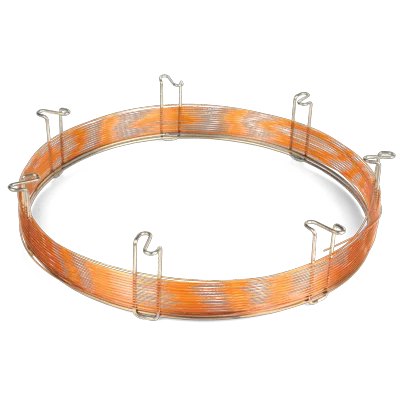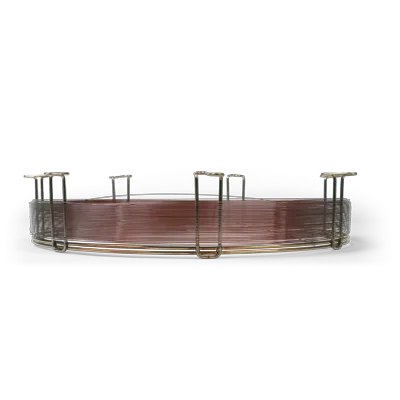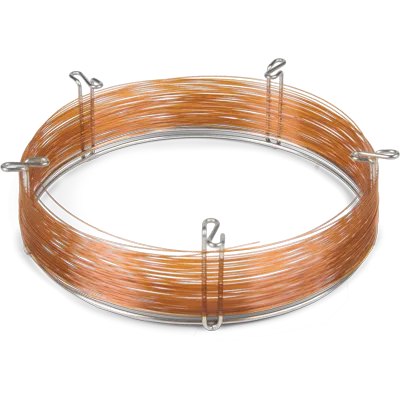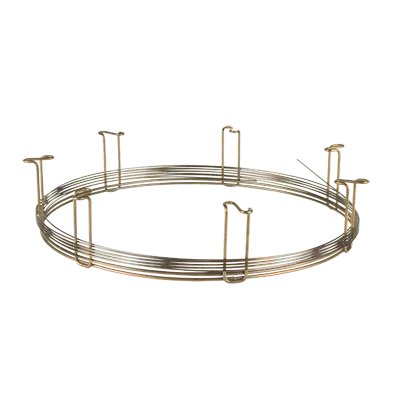
Zebron ZB-1XT SimDist Metal GC Columns
Consistent, Reliable Results for Simulated Distillation
Terms and Conditions
30-day money-back guarantee
Shipping: 2-3 Business Days
Zebron ZB-1XT SimDist GC Columns
Consistent, Reliable Results for Simulated Distillation
- Glass Infusion™ technology for higher efficiency and greater column-to-column reproducibility
- Individual QC testing for every column
- Up to 70 % higher efficiency than other columns
- Increased accuracy for high temperature simulated distillation
Want a flexible fused-silica alternative for SimDist testing? See ZB-1HT-Inferno
Recommended Use
ASTM Methods (D2887, D2887X, D3710, D6352, D7169), Crude Oil, Gasoline Fractions, Petroleum Distillates, Petroleum Fractions, Simulated Distillation, Vacuum Distillates
Overview
Upgrade to Zebron from any 100 % dimethylpolysiloxane phase:
Agilent® | Restek® | SGE® |
|---|---|---|
DB®-1 | Rtx®-1 | BP1 |
| DB-HT SimDis | Rxi®-1HT | BPX1-SimD |
| DB-PS1 | MXT®-1HT SimDist | |
| DB-PS2887 | ||
| CP-SimDist | ||
| CP-SimDist UltiMetal |
Sharper Peak Shape and Better Efficiency through Uniform Glass Infusion™ Coating Technology
1. Sharper Peaks and Higher Efficiency:
Glass Infusion Technology Provides
Uniform Coating and Minimizes
Unwanted Activity.
2. Consistency and Reliability:
Zebron Columns are INDIVIDUALLY
Tested for Better Reproducibility and
Overall Performance.
3. Higher Efficiency:
Up to 70 % Higher Column Efficiency.
4. Long Lifetime and Better Results:
Improved Resolution of C50/C52
Hour after Hour.
5. Guaranteed:
100 % Risk-Free
Improved Recovery and Peak Shape
The Benefits of Glass Infusion™ Technology
The Zebron ZB-1XT SimDist metal columns employ a new proprietary bonding called Glass Infusion Technology. The Glass Infusion technology starts by depositing a very uniform layer of glass that completely covers the internal metal surfaces of the column. The result is a uniform coating throughout the column.
Uniform Glass Infusion ensures adequate covering of exposed metal to promote better recovery and peak shape.
- Each Zebron ZB-1XT is individually tested to confirm and ensure excellent reproducibility.
- The uniform glass coating provides a consistent foundation for stationary phase bonding, thus promoting better over-all efficiency and resolution.
Non-glass infused with exposed metal can cause tailing peaks and sample adsorption.
- Some manufacturers batch test their columns, leading to poor column-to-column reproducibility.
- These exposed surfaces result in abnormal bonding of the stationary phase which affects chromatographic performance, decreases efficiencies, and inconsistent performance between columns.
Upgrade from Tailing Peaks and Sample Adsorption
Zebron™ ZB-1XT SimDist (Glass Infused) vs. Brand X (Not Glass Infused)
Injection: | Split 100:1 @ 250 ˚C, 1.0 μL |
Carrier Gas: | Hydrogen @ 1.93 mL/min (constant pressure) |
Oven Program: | 130 ˚C (Isothermal) |
Detection: | FID @ 325 ˚C |
Sample:
1. Undecane
2. 4-Chlorophenol
3. Tridecane
4. 1-Undecanol
5. Dicyclohexylamine
6. Pentadecane
Easily Realize Resolution Gains on ASTM Methods
Check out your ZB-1XT benefits!
For Your Lab
- Consistent Performance
- Improved Efficiencies
- Extended Lifetimes
- Reduced Carryover
- Minimum Maintenance
For your Refining Process
- Better Process Planning
- Better Fractionating
- Increased Product Yields
Hydrocarbons C7-C100+ (ASTM D7169)
Column: | Zebron ZB-1XT SimDist |
Dimension: | 5 meter x 0.53 mm x 0.15 µm |
Part No.: | |
Injection: | On-Column @ 33 °C, 1 µL |
Carrier Gas: | Helium @ 7 mL/min (constant flow) |
Oven Program: | 30 °C to 450 °C @ 10 °C/min for 10 min |
Detection: | FID @ 450 °C |
Sample:
C7 to C44 hydrocarbons and POLYWAX®655 in CS2
Better Results for High Temperature SimDist Analysis (ASTM D7169)
Why just settle with C90 or C100 when you can extend the performance to higher hydrocarbons and optimize productivity. The combined ruggedness of the metal hardware and high temperature polymer used in each Zebron ZB-1XT SimDist column allows for extended analysis up to C120. With an extended analysis range, higher boiling point compounds will elute off the column instead of deteriorating column and system lifetime by remaining as residues.
Glass Infusion™ Technology provides improved efficiency, allowing sharper peaks and improved signal-to-noise for late eluting and low level components.
Column: | Zebron ZB-1XT SimDist |
Dimension: | 5 meter x 0.53 mm x 0.09 µm |
Part No.: | |
Injection: | On-Column @ 53 °C, 1 µL |
Carrier Gas: | Helium @ 34 mL/min (constant flow) |
Oven Program: | 35 °C to 430 °C @ 9 °C/min for 10 min |
Detection: | FID @ 450 °C |
Sample:
D2887 calibration mix with POLYWAX®1000 in CS2
Documents
- Guide: GC Troubleshooting Quick Reference Guide
- Guide: Zebron GC Column Selection Chart
- Brochures: Zebron Gas Management Brochure
- Supporting Docs: Zebron Gas Filter Selection Tool
- Supporting Docs: Zebron Gas Filter User Guide
- Brochures: Chemical Industry LC & GC Separation Solutions Guide
- Technical Notes: Simulated Distillation (ASTM D6352 and D71679) by GC (TN-2043)
- Technical Notes: Environmental Contaminants Caused by the Oil Spill in the Gulf of Mexico by GC and HPLC (TN-2045)
- Brochures: Zebron ZB-1XT SimDist GC Columns
- Guide: ZB-1XT SimDist GC Guide
FAQs
Can you use organic solvents in with Biozen SEC or Yarra SEC?
Occasionally to facilitate a true entropic SEC separation a small amount of an organic modified such as ACN is required however more than 15% may result in de-naturing or unfolding of the protein to occur and should be avoided.
Can I pack or re-pack my GC liner with wool?
Though the upfront cost of self-packing your liner may seem attractive, the time and headaches caused by resulting tailing or irreproducible peaks can be sizeable! Self-packed wool fibers commonly break during installation and any existing deactivation on the liner can also be scratched or damaged. Scratches in the deactivation layer are likely to occur when removing wool from the liner or re-packing it with new wool. Also, when wool is forcefully inserted or removed, these scratches could expose active sites, resulting in peak tailing and poor reproducibility. Pre-packed Zebron PLUS liners undergo the deactivation process with the quartz wool already in place, which ensures that any active sites that form during packing are not exposed. Its novel touchless packaging and preinstalled O-ring prevent contamination during installation.
Does the Zebron PLUS liner with wool improve my GC column lifetime?
Yes. Zebron PLUS liners are packed with quartz wool, which serves two purposes: a) Quartz wool promotes homogenous vaporization of analytes and solvent in the inlet to effectively transfer them to the head of the GC column. b) Quartz wool acts as a filter, trapping non-volatile impurities and preventing them from proceeding further into the GC column.
I work with dirty samples which produce a residue on my GC liner after approximately 100 injections. Can I scrub/sonicate my liner and reuse it?
It is not recommended to scrub/sonicate your liners. Residue formation indicates contamination. More specifically, this shows that the sample contains non-volatile impurities, in which case it is recommended to replace your liner rather than clean it. Sonication can alter the liner’s deactivation, and scrubbing can create scratches and active sites. As a result, you can have several chromatography problems such as poor quantitation, analyte breakdown, poor reproducibility, peak asymmetry, etc.
Is there a way I can get immediate help with my current and upcoming method?
Absolutely, we're always here to help! You can easily get in contact with our team members by clicking contact us on the menu or better yet, just head to www.phenomenex.com/chatnow and we'll help you out with method recommendations and tips.
I am using an inert GC column for my analysis, and I still see peak tailing. What could be the reason for this?
For analysis of active compounds, it is crucial to use both a highly inert column and a highly inert liner. The liner is the first place of potential analyte interaction during GC analysis; it is important that your analytes are not adsorbed. Zebron PLUS liners undergo a rigorous deactivation process and are tested for inertness to ensure reliable results when working with highly active compounds such as underivatized acids and active bases.
When facing peak and resolution issues in sample analysis by GC, where is the best place to start?
The inlet is the most common place where problems happen in gas chromatography. This is because: • The inlet is subjected to very high temperatures. • There are multiple consumables involved in the inlet that need routine maintenance. • Some inlet modes, such as splitless injection, are a slow process, meaning that target analytes and the inlet can interact with each other before the sample enters the column.
Can you recommend a GC liner that work best when analyzing dirty samples, samples with wide boiling points, or samples with wide molecular weight?
Analysis of dirty samples, samples with wide boiling points, or samples with wide molecular weights can be enhanced by choosing a Zebron™ PLUS liner with quartz wool. Liners packed with wool can prevent non-volatile compounds from entering the column and improve sample vaporization for a more robust, reproducible analysis.
Manufacturer information: Zebron ZB-1XT SimDist GC Columns – Phenomenex (USA). MAS Brand is the official representative of Phenomenex in Egypt.
Specifications for Zebron ZB-1XT SimDist Metal GC Columns
| GC Length (m) | 5 or 10 or 15 or 6 |
| GC Film Thickness (µm) | 0.88 or 0.15 or 0.09 or 0.25 or 2.65 |
| GC Format | 5-inch Cage or Metal Column |
| GC Option | Standard or Custom or w/ GUARDIAN 2 m or w/ GUARDIAN 5 m, Custom |
| Manufacturer | Phenomenex |
| GC Phase | ZB-1XT SimDist Metal |
| GC Internal Diameter (mm) | 0.53 |