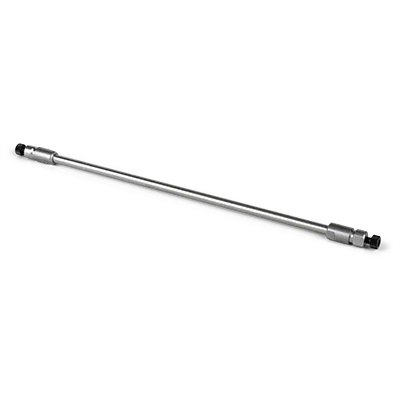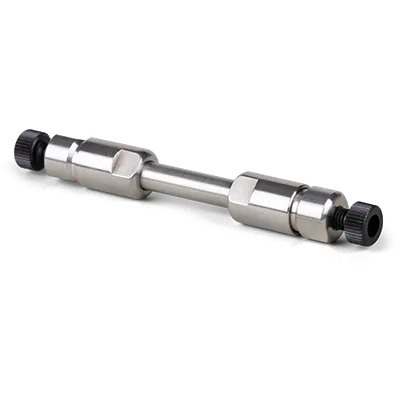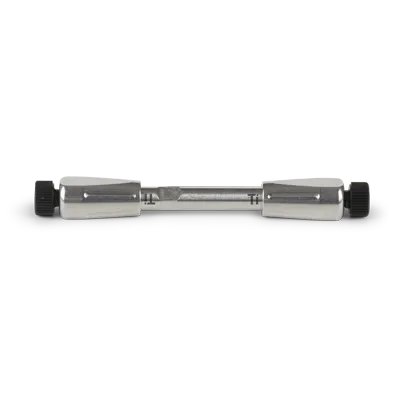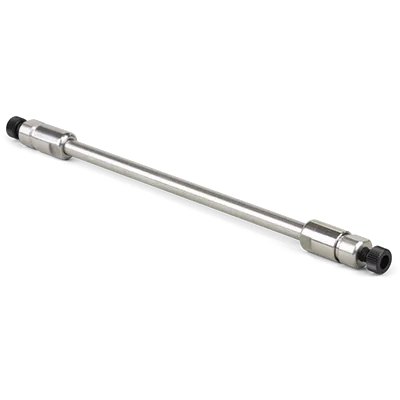
Yarra LC Columns
Better Protein/Peptide Gel Filtration Separations Start Here
Terms and Conditions
30-day money-back guarantee
Shipping: 2-3 Business Days
Yarra GFC/SEC Columns
Better Protein/Peptide Gel Filtration Separations Start Here
Coupled with tight particle and pore size distribution as well as strict packing and QC specification, Yarra SEC/GFC columns allow Biochromatographers to achieve the highest efficiencies and resolution possible for their biomolecule analysis.
For new methods or UHPLC options, upgrade to Biozen SEC columns
| Separation technique | Size Exclusion (SEC / GFC) |
|---|---|
| Application | Biological Analysis |
| Particle size | 3 µm, 5 µm |
| Phases available | 5 |
| Catalogue codes | 13 |
Phases
Yarra No Phase
Recommended Use: —
Yarra SEC-2000
Silica based media with 145Å pore size for size exclusion chromatography
Recommended Use: Molecular weight separation range of 1–300 KDa
Yarra SEC-2000 PREP
Silica based media with 145Å pore size for size exclusion PREP chromatography
Recommended Use: Preparative purification, desalting, and characterization of biomolecules by molecular weight separation range of 1-300 KDa
Yarra SEC-3000
Silica based media with 290Å pore size for size exclusion chromatography
Recommended Use: Molecular weight separation range of 5–700 KDa
Yarra SEC-3000 PREP
Silica based media with 300Å pore size for size exclusion PREP chromatography
Recommended Use: Preparative purification, desalting, and characterization of biomolecules by molecular weight separation range of 5-700 KDa
Yarra SEC-4000
Silica based media with 500Å pore size for size exclusion chromatography
Recommended Use: Molecular weight separation range of 15–1,500 KDa
Yarra SEC-4000 PREP
Silica based media with 500Å pore size for size exclusion PREP chromatography
Recommended Use: Preparative purification, desalting, and characterization of biomolecules by molecular weight separation range of 15-1500 KDa
Documents
- Supporting Docs: HPLC Column Care Guide
- Brochures: United States Pharmacopeia (USP) Allowable Adjustments Guide
- Guide: Protein and Peptide Users Guide
- Supporting Docs: Frequently Asked Questions for UHPLC/HPLC
- Supporting Docs: Yarra Care and Use Notes | Phenomenex
- Supporting Docs: Meeting All Your PREP Needs
- Brochures: Yarra GFC/SEC Column Product Guide
- Supporting Docs: Certificate of Analysis (CofA) Questions and Answers
- Supporting Docs: Certificate of Quality Assurance (CQA) Questions and Answers
- Brochures: Security Guard Column Protection Family Brochure (UHPLC, HPLC, PREP, SFC)
- Technical Notes: Mobile Phase Optimization for Aggregate Analysis of Monoclonal Antibodies (TN-1226)
- Technical Notes: Size Exclusion Chromatography Optimization using the European Pharmacopeia Method for Follitropin Oligomers (TN-1204)
FAQs
What is void volume?
The void volume corresponds to the amount of mobile phase in an LC system. In most separation modes the void volume would be equivalent to the amount of mobile phase needed to elute a compound that doesn't interact with the stationary phase and is hence unretained. In size exclusion, analytes are not separated based on chemical interactions with the stationary phase but rather their ability, based on size, to enter pores in the stationary phase. Therefore, in size exclusion the terms total permeation and total exclusion volume have greater significance than void volume. The total permeation volume corresponds to the amount of mobile phase in the system, including that in the pores of the stationary phase, whereas the total exclusion volume does not include the mobile phase within the pores of the stationary phase. Consequently, the total permeation volume corresponds to the amount of mobile phase needed to elute a compound that is small enough to completely enter into the stationary phase pores and the total exclusion volume is the amount of mobile phase needed to elute a compound that is entirely excluded from the stationary phase pores.
How do I perform molecular weight calibration for SEC?
Plot of KD vs. Log MW KD = (analyte elution time - time to elute the exclusion volume) / (time to elute total permeation volume- time to elute the exclusion volume). Log MW is simply the logarithm of the analyte's molecular weight (base 10)
Can you use organic solvents in with Biozen SEC or Yarra SEC?
Occasionally to facilitate a true entropic SEC separation a small amount of an organic modified such as ACN is required however more than 15% may result in de-naturing or unfolding of the protein to occur and should be avoided.
Can sodium azide be used to remove microbial growth?
Although sodium azide can be added to a solution to prevent microbial growth it is not effective at removing growth that has already occurred. In a system is contaminated with microbial growth it is more effective to flush with 50:50 acetonitrile:water to remove the growth from the system. Note that the column should be flushed with water to remove any buffer salts (e.g. phosphate) before washing with high organic. It may also be necessary to clean or replace guard columns and in-line filters as these are likely to be blocked.
How can I improve peak shapes in SEC?
For ionic/polar compounds, adding a salt (typically 50-100mM) to the mobile phase is a good way to disrupt secondary interactions between analytes and the stationary phase that contribute to poor peak shapes. Commonly, for GFC, NaCl in used. For GPC, lithium bromide (LiBr) is used.
What are some mobile phase considerations for Size Exclusion Chromatography?
The most common application for SEC is aggregate analysis. This requires “native” conditions; i.e. physiological conditions. This requires a buffered solution at around pH 7 with a moderate amount of salt. A good starting point for mobile phase is a 100 mM Phosphate Buffer, pH 6.8. However, there are some instances where it is appropriate to optimize the mobile phase to improve chromatography. If it is suspected the protein is hydrophobic, a small amount of organic solvent (e.g. methanol, acetonitrile, isopropanol) can be added. This can be anywhere between 5-10%. If it is suspected that the protein may have strong ionic character (e.g. basic protein or protein with a high isoelectric point), the ionic strength of the eluent can be increased to improve chromatography. A 2X Phosphate Buffered Saline (i.e. 50 mM Phosphate, 300 mM Sodium Chloride, pH 6.8) is recommended to prevent secondary interactions. Note that increasing the salt will also increase hydrophobic interactions as well. Furthermore, varying the salt may improve the separation of one critical pair, but result in a loss of resolution of another.
What is the optimal salt concentration for good peak shape in size exclusion methods?
Optimal salt concentration can vary depending on the nature of the compound in question. Typically, 150-250 mM works best, however you must balance the ionic and hydrophobic nature of the compound. The lower the salt concentration, the more ion-exchange will be observed. At higher salt concentration, more hydrophobic adsorption is observed due to salting of the protein. We typically recommend the customer uses 50 mM potassium phosphate and 250 mM KCl at pH 6.2 as a starting point to achieve the best results. Potassium is the preferred counter ion as it generates better peak shape and reduces interactions with any silanols at the surface of the particle.
Manufacturer information: Yarra GFC/SEC Columns – Phenomenex (USA). MAS Brand is the official representative of Phenomenex in Egypt.
Specifications for Yarra LC Columns
| Column Phase | SEC-2000 Prep or SEC-3000 Prep or SEC-2000 or SEC-3000 or SEC-4000 |
| Column Particle Size | 3 or 5 |
| Column Length | 150 or 300 or N/A |
| Column Internal Diameter | 4.6 or 7.8 or 21.2 or N/A |
| Column Format | Bulk Media or Analytical |
| Column Option | Standard or Preparative |
| Manufacturer | Phenomenex |