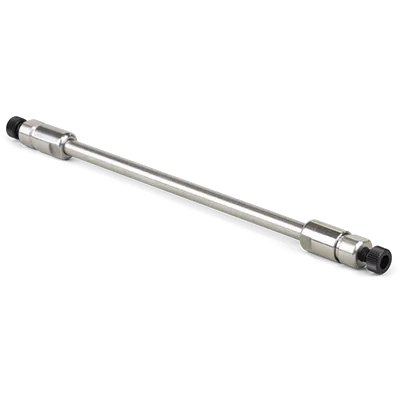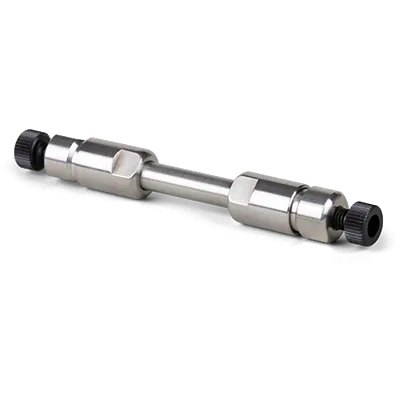
Rezex LC Columns
Excellent Resolution and Reproducibility for Carbohydrates and Organic Acids
Terms and Conditions
30-day money-back guarantee
Shipping: 2-3 Business Days
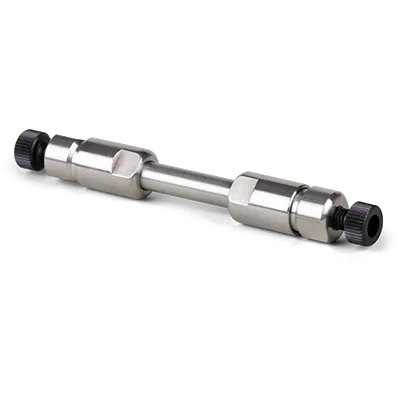
Rezex HPLC Columns
Excellent Resolution and Reproducibility for Carbohydrates and Organic Acids
Rezex carbohydrate HPLC columns achieve reproducible, accurate separations based on multiple modes of interaction. Available in 4 and 8 cross linked sulfonated styrene divinylbenzene (and multiple ionic forms (sodium, hydrogen, potassium, lead, and silver) for a wide range of selectivities. USP L17, L19, L22, L34, and L58 packings available.Use Rezex for carbohydrate, oligosaccharide, and organic acid separations:
| Separation technique | Ion Exclusion / Ligand Exchange |
|---|---|
| Application | Small Molecule Analysis |
| Particle size | 8 µm, 12 µm |
| Phases available | 10 |
| Catalogue codes | 21 |
Overview
Carbohydrate and Organic Acid Analysis
- Excellent resolution and column to column reproducibility
- Easy, accurate quantitation from sharper peak shapes
- Longer column lifetimes and faster run time capability from lower backpressures
- Baseline separation of critical sample components due to higher efficiencies
Rezex columnsfor carbohydrate analysis utilize different ligands. Selecting the right column will allow you to achieve the best resolution for your peaks of interest.
Column Selection Guidelines:
- Retention time chart
- Application examples
- Cross reference guide
Retention Time Chart
| Counter Ion Analyte | RAM Ag+ | RCM Ca+2 | RNM Na+ | RHM H+ | RPM Pb2+ |
|---|---|---|---|---|---|
| Adonitol (Ribitol) | 11.54 | 14.93 | 11.10 | 11.11 | 20.15 |
| D-Altrose | 11.95 | 12.71 | 11.45 | 10.21 | 15.82 |
| D-(-)-Arabinose | 13.01 | 13.56 | 12.65 | 11.24 | 16.47 |
| D-(+)-Digitoxose | 11.90 | 13.82 | 11.39 | 12.59 | 16.47 |
| Dulcitol | 11.64 | 21.61 | 11.10 | 10.71 | 33.25 |
| Meso-Erythritol | 12.31 | 15.49 | 11.78 | 12.14 | 19.82 |
| D-(-)- Fructose | 12.05 | 13.65 | 11.78 | 12.14 | 19.82 |
| L-(-)-Fucose | 12.75 | 13.19 | 12.30 | 11.65 | 16.19 |
| D-(+)-Galactose | 11.87 | 11.73 | 11.47 | 10.19 | 14.94 |
| Gentiobiose | 8.70 | 8.40 | 8.40 | 7.87 | 10.53 |
| D-(+)-Glucose | 11.04 | 10.37 | 10.71 | 9.62 | 12.92 |
| Inositol | 12.59 | 13.35 | 12.14 | 9.98 | 18.87 |
| D- Mannitol | 11.36 | 17.82 | 10.80 | 10.59 | 24.90 |
| D-(+)-Mannose | 12.04 | 12.04 | 11.54 | 10.16 | 16.39 |
| Melibiose | 9.26 | 9.04 | 8.82 | 8.14 | 11.97 |
| D-(+)-Melezitose | 8.00 | 7.93 | 7.66 | 7.54* | 9.94 |
| D-(+)-Raffinose | 8.10 | 8.16 | 7.76 | 7.88* | 10.28 |
| L-(+)-Rhamnose | 11.50 | 12.18 | 11.00 | 10.90 | 14.47 |
| D-(-)-Ribose | 14.59 | 23.38 | 14.34 | 11.42 | 33.48 |
| Salicin | 18.51 | 18.51 | 17.36 | 14.98 | 26.81 |
| D-Sorbitol | 11.91 | 22.45 | 11.39 | 10.83 | 35.97 |
Application Examples and Cross Reference Guide
Rezex | Description | Applications | Bio-Rad® Aminex® | Supelco®Supelcogel™ | WatersSugar-Pak™ | Transgenomic®CARBOSep™ | Sepax®Carbomix® |
|---|---|---|---|---|---|---|---|
| RCM-Monosaccharide(L19 packing)* | 8 % cross-linkedCALCIUM |
| HPX-87C125-0095 | SupelcogelCa | Sugar-Pak 1 | CARBOSepCHO-820 | Carbomix Ca |
| RHM-Monosaccharide(L17 packing)* | 8 % cross-linkedHYDROGEN |
| HPX-87H125-0140 | SupelcogelC-610H & H | NA | ICSepION-300 | Column8 |
| RAM-Carbohydrate | 8 % cross-linkedsilver |
| N/A | N/A | N/A | N/A | N/A |
| RSO-Oligosaccharide | 4 % cross-linked silver |
| HPX-42A125-0097 | SupelcogelAG1 & AG2 | N/A | N/A | N/A |
| RNO-Oligosaccharide | 4 % cross-linked sodium |
| N/A | N/A | N/A | CARBOSep COREGEL-87N | N/A |
| RPM-Monosaccharide(L34 packing)* | 8 % cross-linked LEAD |
| HPX-87P 125-0098 | Supelcogel Pb | N/A | CARBOSep COREGEL-87P | Carbomix Pb |
| RNM-Carbohydrate (L58 packing)* | 8 % cross-linked SODIUM |
| HPX-87N125-0143 | N/A | N/A | N/A | Carbomix Na |
| ROA-Organic Acid (L22 packing)* | 8 % cross-linked HYDROGEN |
| HPX-87H125-0140 | SupelcogelC-610H & H | N/A | N/A | N/A |
| RFQ-Fast Acid | 8 % cross-linked HYDROGEN |
| Fast Acid 125-0100 | N/A | N/A | N/A | N/A |
| RKP-Potassium | 8 % cross-linkedPOTASSIUM |
| HPX-87K125-0142 | SupelcogelK | N/A | CARBOSepCOREGEL-87K | CarbomixK |
| RCU-USP Sugar Alcohols(L19 packing)* | 8 % cross-linkedCALCIUM |
| Sugar Alcohols 125-0094 | N/A | N/A | N/A | N/A |
Phases
Rezex No Phase
Recommended Use: —
Particle Size: 8 µm
Rezex RCM-Monosaccharide Ca+2 (8%)
8% cross-linked calcium
Recommended Use: Monosaccharides, sugar alcohols, and class separation of di-, tri-, and tetra- saccharides
Particle Size: 8 µm
Rezex RFQ-Fast Acid H+ (8%)
8% cross-linked Hydrogen
Recommended Use: Rapid screening of fruit quality and ethanol, acetic acid, glycerol and standard alcohol mixtures
Particle Size: 8 µm
Rezex RHM-Monosaccharide H+ (8%)
8% cross-linked hydrogen
Recommended Use: Monosaccharides in combination with organic acids, fatty acids, alcohols, ketones, neutral compounds, or inorganic salts
Particle Size: 8 µm
Rezex RKP-Potassium K+ (8%)
8% cross-linked Potassium
Recommended Use: Analysis of glyphosate
Particle Size: 8 µm
Rezex RNM-Carbohydrate Na+ (8%)
8% cross-linked sodium
Recommended Use: Analysis of mono-, di-,and tri- saccharides and for matrices which contain high concentration of inorganic sodium
Particle Size: 8 µm
Rezex RNO-Oligosaccharide Na+ (4%)
4% cross-linked sodium
Recommended Use: High resolution of oligosaccharides
Particle Size: 12 µm
Rezex ROA-Organic Acid H+ (8%)
8% cross-linked hydrogen
Recommended Use: Organic acids alone, organic acids in combination with carbohydrates, alcohols, fatty acids, or neutral compounds, ethanol, acetic acid, glycerol, standard alcohol mixtures, and amino sugars
Particle Size: 8 µm
Rezex RPM-Monosaccharide Pb+2 (8%)
8% cross-linked lead
Recommended Use: Sugar alcohol analysis according to the USP procedure, monosaccharides and sugar alcohol analysis, cellobiose, glucose, xylose, arabinose, and mannose and other cellulose products
Particle Size: 8 µm
Rezex RSO-Oligosaccharide Ag+ (4%)
4% cross-linked Silver
Recommended Use: High resolution of oligosaccharides up to 18 degrees of polymerization (Dp)
Particle Size: 12 µm
Documents
- Supporting Docs: HPLC Column Care Guide
- Supporting Docs: Rezex Column Care and Use Notes
- Brochures: United States Pharmacopeia (USP) Allowable Adjustments Guide
- Supporting Docs: Rezex LC Columns: Common FAQs Guide
- Brochures: Rezex for Carbohydrate and Organic Acid Separations
- Brochures: Allowable Adjustments to European Pharmacopoeia (EP) Methods
- Brochures: Chemical Industry LC & GC Separation Solutions Guide
- Supporting Docs: Certificate of Quality Assurance (CQA) Questions and Answers
- Technical Notes: Trace Glyphosate Analysis in Drinking Water by LC-Fluorescence Post-Column Derivatization, EPA Method 547 (TN-1231)
- Technical Notes: Optimizing Pharmacopoeia (Ph. Eur. & USP) Monographs of Sugar Alcohol Excipients Using Rezex Ion-Exclusion HPLC Columns
- Technical Notes: Faster Real-Time Response to Bacterial Infection of Bioethanol Fermentation using a Short Rezex ROA Column (TN-1087)
- Technical Notes: Fast Analysis of Sucrose, Glucose, and Fructose Composition in Fruit Juices and Processed Beverages (TN-1182)
FAQs
What is chromatography?
Chromatography is the separation of components in a mixture based on their chemical nature. Chromatography can be performed in either liquid (HPLC) or gas (GC) forms. Liquid chromatography, specifically High Pressure Liquid Chromatography (HPLC), involves a stationary phase (sorbent), a mobile phase (liquid) and the analyte or compounds of interest. Analytes or compounds of interest are injected onto an HPLC column (packed with sorbent that contains a variety of chemistries) in mobile phase. As the mobile phase, which is carrying the analyte or compounds of interest, travels across the stationary phase, the analyte or compounds of interest separate from each other as they interact with the stationary phase, each eluting from the column at various times. Gas chromatography (GC) is similar to HPLC in that is utilized with working analytes or compounds of interest that can be vaporized without decomposing. In GC, gas is used instead of a liquid (like in HPLC). As analytes or compounds of interest travel in the gas mobile phase and interact with the stationary phase, eluting at various times.
How do I install my new Rezex column?
When installing a Rezex column one should hook up the inlet of the column and flow mobile phase at a low flow rate (slowly ramp up to 0.2 or 0.3 mL/min for a 7.8mm ID column). Have the outlet of the column flow directly into a beaker or attach it to a waste line bypassing the detector. A gray or brownish discharge will come out the column outlet for quite some time (5-50 mL). This is perfectly normal for all ion exclusion columns and part of prepping the column for use. After the discharge fades, slowly shut down the column, install the column into the heater and the outlet line and use the column once equilibrated to operating conditions.
How do Rezex columns separate simple sugars?
The mechanism for sugar separations is a mixture of size exclusion and affinity of the sugars towards the metal ion associated with the phase. The sugars form complexes with the metal ion, the strength of which dictate their order of elution from the column.
What sample preparation is needed for Rezex samples?
Filtration of all samples is a must, especially for fermentation samples. The use of non-retentive SPE should also be considered if working with particularly messy samples. The use of a SecurityGuard cartridge is also a must if one is trying to improve the column lifetime of a Rezex column. Mobile phase should also be filtered to extend column lifetime.
What are the reasons for noisy baseline with ELSD (Evaporative Light Scattering Detectors)?
The reasons for noisy baseline with ELSD detectors are: • Evaporation temperature too low — the solvent is not completely evaporated • Evaporation temperature too high — the solvent is boiling in the nebulizer • Air or nitrogen not clean — remove traces of water or oil with a gas trap • Gas flow too low — poor nebulization of the eluent, increase the gas flow • Non-volatile material in the eluent — replace any buffer salt with a volatile one (such as ammonium acetate) and ensure that the eluent is particle free
What detectors can be used for sugar analysis?
Refractive index (RI) and evaporative light scattering detector (ELSD) can be used since both function on the basis of simple refraction. ELSD generally is more sensitive than RI and can also be used in gradient mode. Charged aerosol detector (CAD) can also be used since it can detect any non-volatile compound.
Why is there a limit on the amount of organic solvent I can use with Rezex?
A high concentration of water is necessary to ensure the sulfonate ligand is in an active ionized state. Furthermore, a high percentage of organic could cause irreversible swelling of the polymer backbone
How do I optimize my fermentation analysis using Rezex ROA?
The two main parameters in optimizing a fermentation analysis are mobile phase concentration and column length. For modulating organic acid retention one can raise or lower the acid concentration (0.005N H2SO4 is typical) to increase or decrease the retention of organic acids. Di-carboxcyclic acids are particularly sensitive to changes in acid concentration (temperature can have a slight influence too). Retention of starches and sugar is mostly related to column length: shorter column reduce retention (and resolution) of sugars. Retention of alcohols are similarly influenced by column length, but can also be modulated by temperature as well as small addition of organic solvents in the mobile phase (note: Rezex columns can only handle very small percentages of alcohols and acetonitrile).
How can I get a stable baseline from my RI detector?
RI detectors are sensitive to changes in flow rate, mobile phase composition and temperature. Ensure that the reference cell is full of the same mobile phase you are using for the method. Check that your pump is providing a stable flow rate. Finally, if your RI detector has its own temperature control, make sure that it is matched with the mobile phase temperature for the method. It is often advisable to have both the column and detector held at a higher temperature than ambient to ensure that a constant temperature can be maintained.
What Rezex columns should I use for my fermentation analysis?
ROA is typically the column used for separating sugar and organic acid mixtures commonly seen in fermentation analysis, the unique mobile phase used (typically 0.005N H2SO4) allow for separation of sugars and starches as well as organic acids and alcohols; all are critical in monitoring fermentation processes.
What Rezex phase should I use for my sugar separations?
There are two main types of Rezex separations: sugar separations and multi-component separations and the type of separation will determine the columns and mobile phase used for the separation. For sugar separations water is used for the mobile phase and sugars are separated based in their unique interactions with the stationary phase: RHM mostly separates sugars by their size and if they are pentose or hexose sugars, RCM and RPM also separate sugars based on the stereochemistry too. The Rezex brochure and Phenomenex catalog both list specific retention times of sugars and one can choose a column based on the sugars they are separating.
What is the difference between Rezex ROA and Rezex RHM?
Both Rezex ROA and RHM columns are packed with the same stationary phase. However, the difference between the two columns is that ROA is QC tested under acidic conditions and the RHM is QC tested under neutral conditions. ROA is tested under acidic conditions as the intended analysis is for organic acids, which will be neutral under acidic conditions (e.g. 5mM H2SO4 Buffer)
Manufacturer information: Rezex HPLC Columns – Phenomenex (USA). MAS Brand is the official representative of Phenomenex in Egypt.
Specifications for Rezex LC Columns
| Column Phase | RKP-Potassium K+ 8% or RNO-Oligosaccharide Na+ (4%) or RCU-USP Sugar Alcohols or RSO-Oligosaccharide Ag+ 4% or RSO or RFQ-Fast Acid H+ (8%) or RKP-Potassium K+ (8%) or ROA-Organic Acid H+ (8%) or RNM-Carbohydrate Na+ (8%) or RHM-Monosaccharide H+ (8%) or RCM-Monosaccharide Ca+2 (8%) or RPM-Monosaccharide Pb+2 (8%) |
| Column Particle Size | 8 or 12 or N/A |
| Column Length | 30 or 50 or 60 or 100 or 150 or 200 or 250 or 300 |
| Column Internal Diameter | 4 or 4.6 or 7.8 or 10 or 21.2 |
| Column Format | Analytical or Guard (SecurityGuard) |
| Manufacturer | Phenomenex |
| Column Option | Standard |