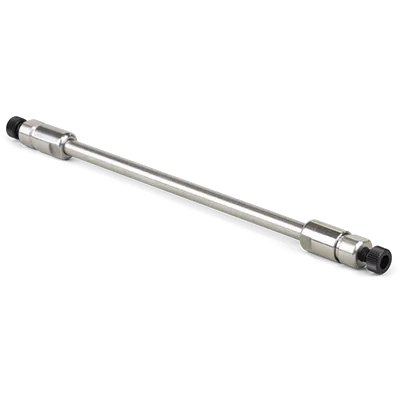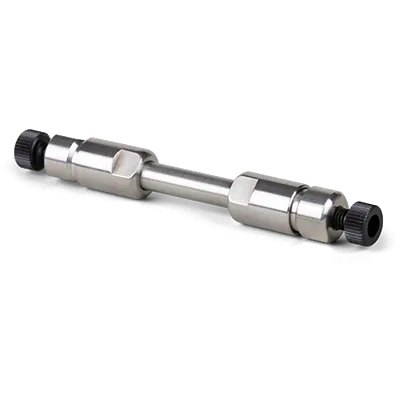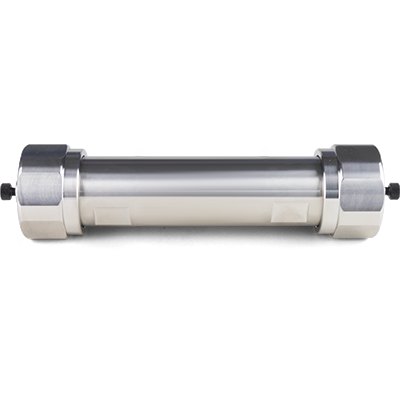
Phenogel LC Columns
Enhance Resolution for Polymer Analysis using Non-Aqueous GPC/SEC
Terms and Conditions
30-day money-back guarantee
Shipping: 2-3 Business Days
Phenogel GPC Columns
Enhance Resolution for Polymer Analysis using Non-Aqueous GPC/SEC
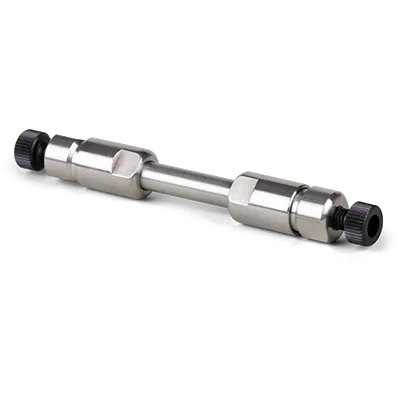
Phenogel size exclusion columns for gel permeation chromatography (GPC) are composed of highly cross-linked styrene-divinylbenzene (SDVB) and achieve high resolution and tight linear calibration curves. Phenogel GPC columns are available in seven different pore sizes, ranging from 50 Å to 106 Å; and a linear bed configuration. Pore size distribution and pore volume are closely controlled parameters in the manufacturing process, accounting for high resolution, tight linear calibration curves, and excellent column-to-column reproducibility. USP L21 packings available.
| Separation technique | Gel Permeation (GPC) |
|---|---|
| Application | Small Molecule Analysis |
| Pore size | 3 Å, 5 Å, 50 Å, 100 Å, 500 Å |
| Particle size | 5 µm, 10 µm |
| Phases available | 8 |
| Catalogue codes | 21 |
Phases
Phenogel 100A
100Å pore size cross-linked styrene divinyl benzene
Recommended Use: Separation of small organics (500 - 6 K MW)
Particle Size: 10 µm, 5 µm
Phenogel 10E3A
10^3Å pore size cross-linked styrene divinyl benzene
Recommended Use: Separation of resins (1 K - 75 K MW)
Particle Size: 10 µm, 5 µm
Phenogel 10E4A
10^4Å pore size cross-linked styrene divinyl benzene
Recommended Use: Separation of resins (5 K - 500 K MW)
Particle Size: 10 µm, 5 µm
Phenogel 10E5A
10^5Å pore size cross-linked styrene divinyl benzene
Recommended Use: Separation of resins (10 K - 1,000 K MW)
Particle Size: 10 µm, 5 µm
Phenogel 10E6A
10^6Å pore size cross-linked styrene divinyl benzene
Recommended Use: Separation of high MW polymers (60 K - 10,000 K MW)
Particle Size: 10 µm, 5 µm
Phenogel 500A
500Å pore size cross-linked styrene divinyl benzene
Recommended Use: Separation of small organics (1 K - 15 K MW)
Particle Size: 10 µm, 5 µm
Phenogel 50A
50Å pore size cross-linked styrene divinyl benzene
Recommended Use: Separation of small organics (100 - 3 K MW)
Particle Size: 10 µm, 5 µm
Phenogel Guard
Guard column for Phenogel Columns
Recommended Use: Protect and extend column lifetime with a guard column.
Particle Size: 10 µm, 5 µm
Phenogel Linear(2)
Mixed pore size cross-linked Styrene Divinyl Benzene
Recommended Use: Separation of high MW polymers (100 - 10,000 K MW)
Particle Size: 5 µm
Phenogel No Phase
Recommended Use: —
Particle Size: 10 µm
Documents
- Supporting Docs: Phenogel Column Care Note
- Supporting Docs: HPLC Column Care Guide
- Poster: Introduction to GPC Method Development Poster
- Brochures: Phenogel Non-Aqueous GPC/SEC Columns
- Supporting Docs: Meeting All Your PREP Needs
- Brochures: GPC Solvent Savings and Cost Savings
- Brochures: Chemical Industry LC & GC Separation Solutions Guide
- Brochures: Extend the Life of Your Valuable GPC Columns
- Technical Notes: Optimizing Gel Permeation Chromatography (GPC) using Phenogel GPC/SEC Columns
- Technical Notes: Pharmaceutical Tablet and Capsule Excipients by Gel Permeation Chromatography (GPC) (TN-1155)
- Technical Notes: Oligomer Composition of Over-The-Counter Omega-3 Fish Oil Capsules by Gel Permeation Chromatography (Ph. Eur. Monograph 1912) (TN-1180)
FAQs
What is chromatography?
Chromatography is the separation of components in a mixture based on their chemical nature. Chromatography can be performed in either liquid (HPLC) or gas (GC) forms. Liquid chromatography, specifically High Pressure Liquid Chromatography (HPLC), involves a stationary phase (sorbent), a mobile phase (liquid) and the analyte or compounds of interest. Analytes or compounds of interest are injected onto an HPLC column (packed with sorbent that contains a variety of chemistries) in mobile phase. As the mobile phase, which is carrying the analyte or compounds of interest, travels across the stationary phase, the analyte or compounds of interest separate from each other as they interact with the stationary phase, each eluting from the column at various times. Gas chromatography (GC) is similar to HPLC in that is utilized with working analytes or compounds of interest that can be vaporized without decomposing. In GC, gas is used instead of a liquid (like in HPLC). As analytes or compounds of interest travel in the gas mobile phase and interact with the stationary phase, eluting at various times.
What effect does temperature have in GPC?
The major impact of choice of temperature in GPC is analyte solubility. In general GPC systems will be run at the lowest temperature where analytes are fully soluble in the mobile phase. Increasing temperature increases analyte solubility, whilst also decreasing mobile phase viscosity and hence system back pressure.
How do I perform molecular weight calibration for SEC?
Plot of KD vs. Log MW KD = (analyte elution time - time to elute the exclusion volume) / (time to elute total permeation volume- time to elute the exclusion volume). Log MW is simply the logarithm of the analyte's molecular weight (base 10)
How should I couple my GPC columns in series?
Traditional logic suggests that the columns should be placed in order of increasing pore size (smallest pore size column closest to the injector). In practice, the order is typically not important as long as it is documented (perhaps experimentally determined) to remain consistent in subsequent analyses.
What is the best approach to separate polymers over a very wide range of molecular weights?
It’s very common to use multiple columns of varying pore size in series in order to separate polymers with vastly different molecular weights. Traditional logic suggests that the columns should be placed in order of increasing pore size (smallest pore size column closest to the injector). In practice, however, the order is typically not important as long as it is documented (perhaps experimentally determined) to remain consistent in subsequent analyses. In general, however, the order in which columns are placed has very little effect on the resulting separation. Another option is to use mixed/linear columns that contain particles with various pore sizes. The main benefit of mixed pore size columns is that you may be able to get adequate separation with a single column. Generally, if fewer columns are used there is less analyte dispersion in the mobile phase, so peaks are sharper and sensitivity is better. However, when polymers are relatively close in size (<30% difference), it may still be necessary to have the additional plates provided by multiple columns in series to obtain adequate separation.
What cleaning procedure can I use to regenerate my GPC column?
The sample solvent in GPC should normally dissolve the entire sample, negating the need for the column to be cleaned. However if it is evident that the column is contaminated, the first consideration is what component of the sample is likely to be sticking. Once the source of contamination has been identified, a solvent which is suitable for dissolving it should be selected. Note that it is important to consider whether the solvent chosen is miscible with the current mobile phase, and also what degree of swell the two different solvents impart on the packing material. Provided there is not a large difference in swell, and the two solvents are miscible, the column can then be flushed with the cleaning solvent for 20 column volumes, before returning to the method mobile phase.
How should I switch the solvent in my GPC column?
The first step is to check which solvent is currently in the column, having ascertained this the GPC system should then be equilibrated with this solvent prior to the column being attached. You are then ready to "solvent switch the column". Attention should be given to the swell factor of the solvent within the column, together with the swell factor of the desired solvent. Solvents fall into the swell categories 70-80%, 60%, 50% and 30%. Changes can be made directly from 70-80% to 50% or 60% swell solvents, however if a 30% swell solvent is desirable for the analysis then it is necessary to switch first to an intermediate swell solvent. In all cases care must be taken to avoid immiscible solvent mixtures. Finally, each time you solvent switch GPC columns the columns will age a little, so it is advisable to solvent switch as little as possible. Ideally sets of columns are dedicated to specific solvent systems.
What solvent should I use for my separation using Phenogel?
The main factor on solvent use is solubility. What solvent is your analyte soluble in? That will dictate the mobile phase used for your separation because your analytes must be soluble in the mobile phase to be separated by the column. Sometimes poor resolution or low recovery of an analyte can be caused by poor solubility of the analyte in the selected mobile phase.
What impact does temperature have on GPC separations using Phenogel?
Temperature typically only has minor impacts on GPC separations, but it should be considered nevertheless. Elevating the column temperature can help improve solubility of some analytes which may improve the resolution of poorly soluble analytes. Further, increased column temperature can also reduce mobile phase/diluent viscosity mismatches which can improve the performance of a separation. One caution one must consider with elevated temperature relates to the flash point or boiling point of your mobile phase solvent. Although it is sometime tragically overlooked, one does not want to do a separation at a temperature anywhere close the flash point of a mobile phase.
How do I determine molecular weight of my Polymer using Phenogel GPC columns?
Especially for large polydisperse polymers one may only see one peak on their GPC run. So how do you figure out the polymer’s average molecular weight (MW) and polydispersity? There are a lot of different software programs that determine that for you, but key is using molecular weight standards that are most similar to the compounds you are separating (there are several vendors that sell specific GPC standards). The Retention time of your polymer peak compared to a standard gives the mean molecular weight and the width of the peak provides information on the polydispersity of the polymer being analyzed.
How do I optimize the resolution of my analytes in a GPC method using Phenogel?
This is probably the #1 question we receive about GPC. The main selectivity adjustment is the column. Different pore size columns have a different molecular weight separation ranges, depending on the size of your analyte there are probably 2 or 3 Phenogel columns that might work for that size range. If the most suited column for a molecular weight does not provide the best separation, then the range above or below might be a better separation option. The Phenomenex catalog or web site are good sources of additional information on column options. Flow rate and solvent selection can also have an impact on the resolution of a GPC method.
My GPC method uses 3 columns in series. Does it matter what order the columns are in?
Column order does matter for a separation. Key is consistency in the column order. Most methods typically go from large pore size to small pore size, others do it in opposite order. They key is to be consistent and use the same column order run to run to not change the resolution of your method.
Manufacturer information: Phenogel GPC Columns – Phenomenex (USA). MAS Brand is the official representative of Phenomenex in Egypt.
Specifications for Phenogel LC Columns
| Column Phase | Guard or Linear/Mixed or Guard (in DMF MP) or 10E or (in DMF MP) or 10E (in DMF MP) 3 Å or 10E (in DMF MP) 5 Å or 50A or 100A or 500A or Standard |
| Column Particle Size | 5 or 10 |
| Column Length | 30 or 50 or 150 or 300 or 600 |
| Column Internal Diameter | 4.6 or 7.8 or 21.2 |
| Column Pore Size | 3 or 5 or 50 or 100 or 500 |
| Column Format | Analytical or Guard (SecurityGuard) |
| Manufacturer | Phenomenex |
| Column Option | Standard |