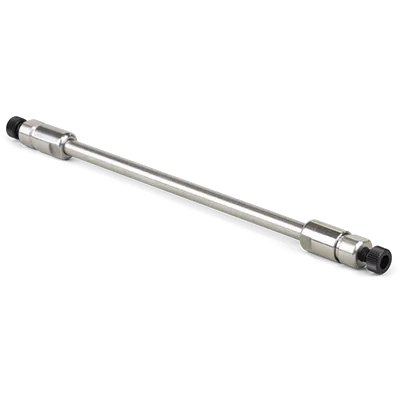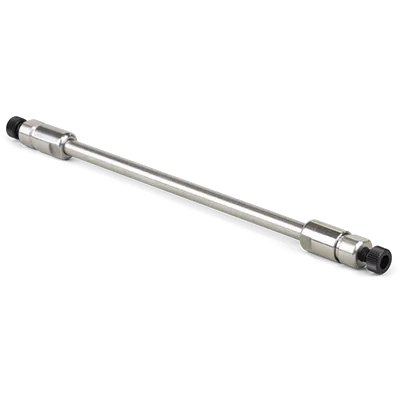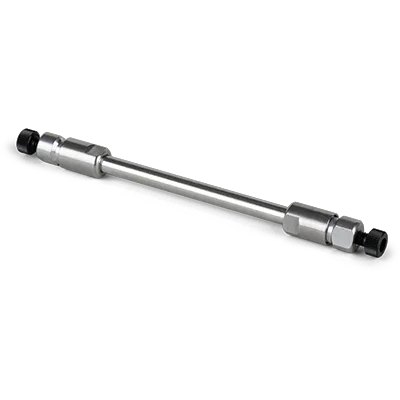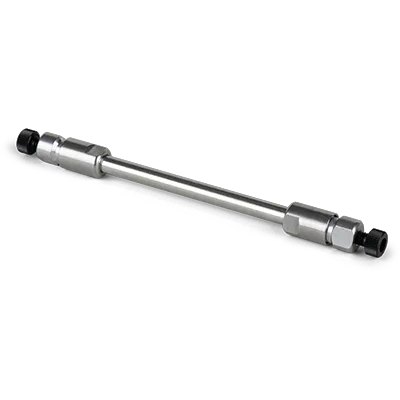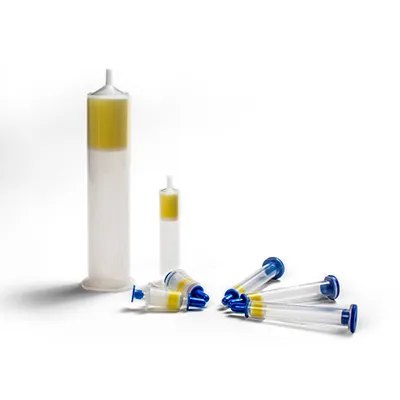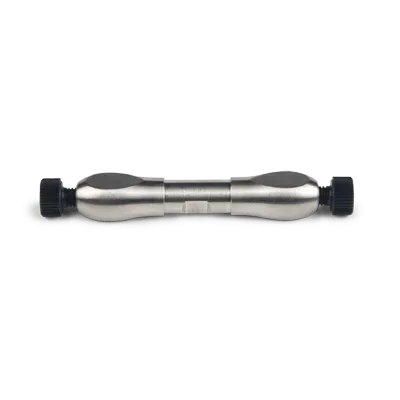
Luna Omega LC Columns
World Renowned HPLC Media Reinvented for UHPLC
Terms and Conditions
30-day money-back guarantee
Shipping: 2-3 Business Days
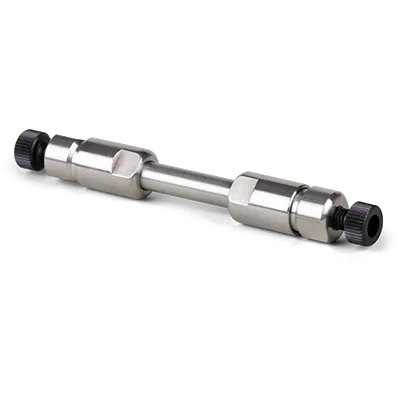
Luna Omega HPLC/UHPLC Columns
World Renowned HPLC Media Reinvented for UHPLC!
The cutting edge thermally modified Luna Omega particle delivers high efficiency, ruggedness, reproducibility, and dependability for a wide range of chromatographic analyses. Luna Omega HPLC and UHPLC columns are built upon more then 20 years of applied knowledge, invention, and customer experience in the manufacture and packing of LC columns. The particle’s novel design and proprietary manufacturing process results in greater particle inertness, a stronger particle morphology, and more consistent porosity.
| Separation technique | HILIC / Reversed Phase (RP) |
|---|---|
| Application | Small Molecule Analysis |
| Pore size | 100 Å |
| Particle size | 1.6 µm, 3 µm, 5 µm |
| Phases available | 5 |
| Catalogue codes | 149 |
Overview
Luna Omega Silica
One of the world’s leading HPLC brands, now enhanced for incredible HPLC and UHPLC performance! Luna Omega 1.6, 3, and 5 µm columns culminate 20 years of technological prowess, advancements, and innovation from Phenomenex! With astounding efficiency levels, highly versatile selectivities, and trusted accuracy, Luna Omega columns will take your chromatographic experience to a new level.
Thermal Modified Pore Structure
Material Characteristics
| Phase | Particle Sizes (µm) | Pore Size (Å) | Surface Area (m2/g) | Carbon Load (%) | pH Stability | Pressure Limit (Bar/psi) | USP Column Classification |
|---|---|---|---|---|---|---|---|
| C18 | 1.6, 3, 5 | 100 | 260 | 11 | 1.5 – 8.5* | 1034/15000** | L1 |
| PS C18 | 1.6, 3, 5 | 100 | 260 | 9 | 1.5 – 8.5* | 1034/15000** | L1 |
| Polar C18 | 1.6, 3, 5 | 100 | 260 | 9 | 1.5 – 8.5* | 1034/15000** | L1 |
| Omega SUGAR | 3 | 100 | 260 | 2 | 2.0 – 7.0 | 1034/15000** | L8 |
| Omega HILIC | 1.6, 3 | 100 | 260 | 5 | 2.0 – 7.0 | 1034/15000** | L20 |
*pH stability under gradient conditions. pH stability is 1.5-10 under isocratic conditions.
**Columns with IDs ≤ 4.6 mm have a pressure limit of 1034 bar/15000 psi, columns with 10 mm IDs have a pressure limit of 414 bar/6000 psi, Luna Omega AXIA columns have a pressure limit of 241 bar/3500 psi.
Controlled Column Reproducibility
Batch-to-batch and column-to-column, Luna® Omega media and columns are designed to be consistent and incredibly accurate tools for your analysis. Each batch and column are quality tested to ensure dependability and reproducibility.
Quality documents are now digital, find your CQA here. www.phenomenex.com/QD
Conditions for all columns:
Column: | |
Dimensions: | 50 x 2.1 mm |
Flow rate | 0.4 ml |
Temperature | Ambient |
Detection | UV @ 220 nm |
Mobile Phase: | A: Water, B: Acetonitrile |
Part No.: |
Gradient : Time (min) | % B |
| 0 | 20 |
| 6 | 60 |
| 6.01 | 20 |
| 8 | 20 |
Sample
- Estriol
- Prednisolone
- Hydrocortisone
- Cortisone
- Cortisone Acetate
- 21-Hydroxycortisone
- 17-Hydroxycortisone
- Deoxycorticosterone
Scalable from UHPLC to HPLC to PREP
Direct Scalability 1.6 µm to 5 µm
Conditions for all columns:
Column: | |
Dimensions: | 50 x 2.1 mm |
Flow Rate: | 0.4 mL/min |
Temperature: | Ambient |
Detection: | UV @ 254 nm |
Mobile Phase: | A: Water with 0.1% Formic Acid, B: Acetonitrile with 0.1% Formic Acid |
Gradient : Time (min) | % B |
| 0 | 5 |
| 5 | 95 |
Sample
- Uracil2. Pindolol3
- Chlorpheniramine
- Nortriptyline
- 3-Methyl-4-nitrobenzoic acid
- 5-Methyl salicylaldehyde
- Hexanophenone
Scalable from UHPLC to HPLC to PREP
Comparative separations may not be representative of all applications.
UHPLC Efficiency Comparison
Conditions for all columns:
| 50 x 2.1 mm | |
Flow Rate: | 0.5 mL/min | |
Temperature: | Ambient | |
Detection: | UV @ 254 nm | |
Mobile Phase: | Acetonitrile/Water (65:35) | |
System: | ACQUITY UPLC® |
Sample:
Naphthalene*
Comparative separations may not be representative of all applications.
*Efficiency (plates/meter) comparison is based on peak performance associated with the compound naphthalene for all columns.
Phases
Luna Omega C18
Fully porous silica bonded with C18
Recommended Use: Reproducible C18 phase for HPLC and UHPLC separations of hydrophobic compounds
Particle Size: 5 µm, 3 µm, 1.6 µm
Luna Omega HILIC
Recommended Use: Enhanced polar compound retention, separation and selectivity for small polar analytes
Luna Omega No Phase
Recommended Use: —
Particle Size: 5 µm, 1.6 µm
Luna Omega Polar C18
Fully porous silica bonded with C18 with a polar modified surface
Recommended Use: Polar retentive C18 phase for HPLC and UHPLC separations of hydrophobic/polar compounds
Particle Size: 5 µm, 3 µm, 1.6 µm
Luna Omega PS C18
Fully porous silica bonded with C18 and positive surface charge
Recommended Use: Positive surface C18 phase for HPLC and UHPLC separations of hydrophobic/basic compounds
Particle Size: 5 µm, 3 µm, 1.6 µm
Luna Omega SUGAR
Proprietary fully porous particle
Recommended Use: Polyamide/amine phase for reversed phase and HILIC mode for the separation of polyols/sugars
Particle Size: 3 µm
Documents
- Technical Notes: Micro-flow Peptide Separations
- Guide: HPLC Troubleshooting Guide
- Brochures: Toxicology Greatest Hits
- Guide: 2026 Product Catalog – Explore Full Range | Phenomenex
- Guide: HPLC Troubleshooting - Peak Issues
- Guide: HPLC Troubleshooting - Baseline Issues
- Guide: HPLC Troubleshooting - Pressure Issues
- Guide: HPLC Troubleshooting - Leak Issues
- Guide: PFAS Complete Testing Guide
- Guide: Drugs and Metabolites Separation Guide
- Brochures: PFAS Analytical Workflow Solutions
- Technical Notes: Separation of Colistin Sulfate and its Organic Impurities per USP Monograph
FAQs
What is chromatography?
Chromatography is the separation of components in a mixture based on their chemical nature. Chromatography can be performed in either liquid (HPLC) or gas (GC) forms. Liquid chromatography, specifically High Pressure Liquid Chromatography (HPLC), involves a stationary phase (sorbent), a mobile phase (liquid) and the analyte or compounds of interest. Analytes or compounds of interest are injected onto an HPLC column (packed with sorbent that contains a variety of chemistries) in mobile phase. As the mobile phase, which is carrying the analyte or compounds of interest, travels across the stationary phase, the analyte or compounds of interest separate from each other as they interact with the stationary phase, each eluting from the column at various times. Gas chromatography (GC) is similar to HPLC in that is utilized with working analytes or compounds of interest that can be vaporized without decomposing. In GC, gas is used instead of a liquid (like in HPLC). As analytes or compounds of interest travel in the gas mobile phase and interact with the stationary phase, eluting at various times.
Does high pH mobile phase reduce the sensitivity of basic analytes in LC-MS?
Using high pH mobile phase, the retention of polar bases will be increased. Signal response does depend upon ionization state, so if we use high pH, we are actually de-ionizing our bases and should lose sensitivity. But this doesn’t happen actually. When we increase the retention of the polar base analytes using high pH, it elutes later in the gradient run and in a high percentage of organic (acetonitrile or methanol). For example, when using formic acid, the polar base analyte peak is eluting in about 5-10% acetonitrile, but when we switch to pH 10, the polar base analyte peak is coming off in about 30-40% acetonitrile. The increased % of acetonitrile in the source is what allows the ions to be ionized thoroughly, thereby giving you a better response in ESI-MS.
When conducting cannabis analysis, how can you prevent the acetonitrile used in potency analysis from contaminating laboratory air and interfering with residual solvent analysis?
There are many potential sources and solutions: Put caps with filters or sorbent traps on your HPLC mobile phase bottles and solvent waste receptacles; don’t leave residual acetonitrile in pipette barrels; do all your potency extractions and standard preparations in a fume hood; and if you are using a triple quad MS for pesticide analysis, don’t discharge the vacuum exhaust from the ionization source into the lab.
Which C18 columns are most appropriate for preparative separations?
Phenomenex has a variety of preparative C18 columns to choose from. If the you are looking for a material that can handle large sample volumes then Luna C18(2) would be the best option. Gemini NX-C18 offers extended pH stability for high pH analyses and a different selectivity to Luna C18(2). Kinetex core-shell columns are best suited for those who are looking for high efficiency preparative applications often where closely eluting impurities pose a problem. Kinetex C18 is also fully scalable from UHPLC to Prep so it is perfect for labs that require the same selectivity across multiple particle sizes. Luna Omega Polar C18 and PS C18 offer a different selectivity to more traditional C18 phases and would be ideal for analysts who need a different selectivity or greater retention of polar compounds.
What detectors can be used for sugar analysis?
Refractive index (RI) and evaporative light scattering detector (ELSD) can be used since both function on the basis of simple refraction. ELSD generally is more sensitive than RI and can also be used in gradient mode. Charged aerosol detector (CAD) can also be used since it can detect any non-volatile compound.
Why does Luna Omega PS C18 provide better peak shapes for basic compounds?
The positive charge on the surface of the silica repels positively charged analytes. This prevents basic nitrogen groups from ionically interacting the uncharged surface silanol groups (the interaction which causes peak tailing).
Why does the thermal treatment of Luna Omega result in higher efficiency?
The use of TEMPS greatly reduces the contribution of micropores to the overall measured surface area of Luna Omega. The reduction of micropores provides allows for molecules to migrate into and out of the pore structure for effectively, increasing the efficiency of the separation.
What is the pressure stability of the Luna Omega packing material?
Luna Omega 1.6 µm columns are stable to 1000 bar, Luna Omega 5 µm columns are pressure stable to 600 bar.
Is Luna Omega scalable?
Yes, Luna Omega is fully scable for selectivity from UHPLC (1.6 µm) to HPLC (3 µm) to PREP (5 µm)
Which Luna Omega HPLC / UHPLC phases are stable in 100% aqueous conditions?
Luna Omega Polar C18 and PS C18 are both stable under 100% aqueous conditions.
What changes are allowed to USP / EP gradient HPLC methods?
When using a gradient method, no change may be made to particle size or column dimensions. They must be the same as those directed in the monograph.
Is Luna Omega C18 directly scalable to Luna C18(2)?
Both Luna C18(2) and Luna Omega C18 utilise the same bonded phase chemistry, however the surface area of the materials is different. Selectivity will be very similar, but overall retentivity may be slightly different.
Manufacturer information: Luna Omega HPLC/UHPLC Columns – Phenomenex (USA). MAS Brand is the official representative of Phenomenex in Egypt.
Specifications for Luna Omega LC Columns
| Column Phase | C18 or HILIC or PS-C18 or Polar-C18 or SUGAR |
| Column Particle Size | 1.6 or 3 or 5 |
| Column Length | 20 or 30 or 50 or 100 or 150 or 250 or N/A |
| Column Internal Diameter | 0.15 or 0.3 or 0.5 or 1 or 2 or 2.1 or 3 or 4.6 or 10 or 21.2 or 30 or 50 or N/A |
| Column Format | Bulk Media or Analytical or Capillary / Nano or Preparative (AXIA Packed) or Guard (SecurityGuard) |
| Column Option | Standard or AXIA Packed or Capillary |
| Manufacturer | Phenomenex |
| Column Pore Size | 100 |