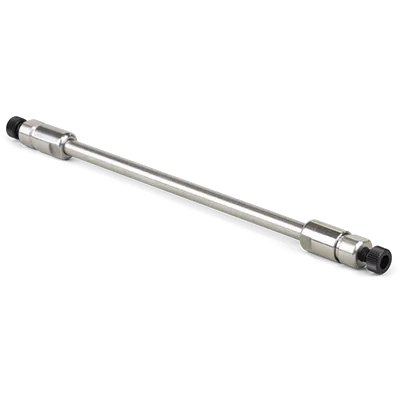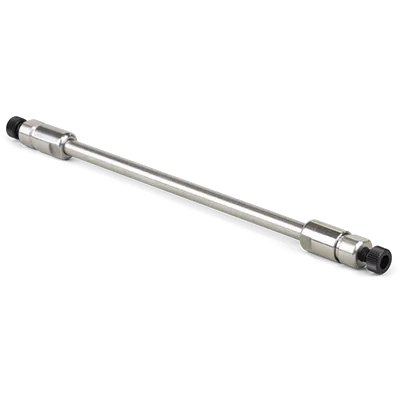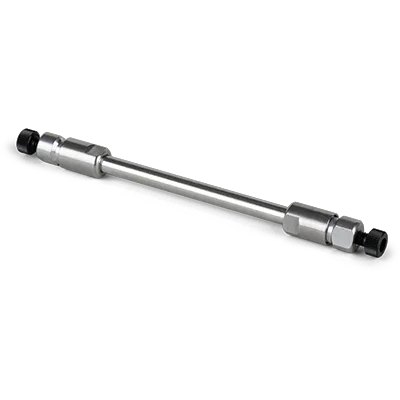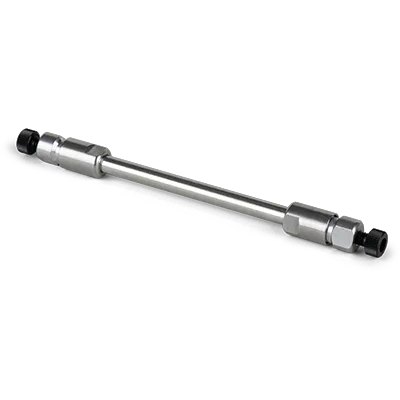
Luna LC Columns
One of the World's Leading LC columns
Terms and Conditions
30-day money-back guarantee
Shipping: 2-3 Business Days
Luna HPLC Columns
One of the World’s Leading LC columns
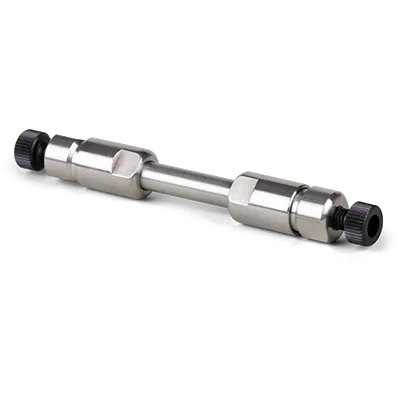
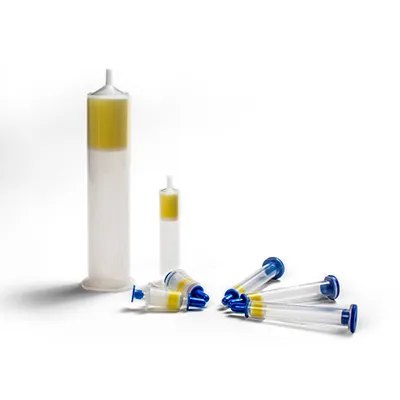
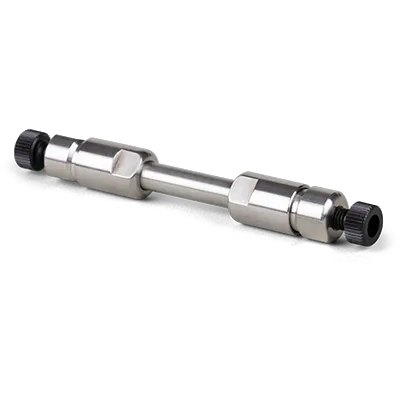
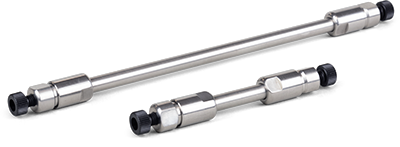
Luna HPLC columns are renowned for their outstanding reliability and adaptability in high-performance liquid chromatography (HPLC). Manufactured by Phenomenex, Luna HPLC columns are made from 99.999% ultra-pure, metal-free silica, with meticulous attention given to quality control across all aspects of its structure and chemistry. This guarantees that Luna columns consistently deliver reliable performance, ensuring dependable method reproducibility. The Luna series offers diverse selectivity, making it suitable for a broad range of chromatographic applications, from microbore and fast LC to preparative and bulk purification scales.
| Separation technique | HILIC / Ion Exchange (IEX) / Normal Phase (NP) / Reversed Phase (RP) |
|---|---|
| Application | Small Molecule Analysis |
| Pore size | 100 Å, 200 Å, 1000 Å |
| Particle size | 2.5 µm, 3 µm, 5 µm, 10 µm, 15 µm |
| Phases available | 28 |
| Catalogue codes | 533 |
Overview
All Luna products uphold the high standards our customers depend on. Featuring high surface area particles, Luna columns deliver improved resolution and performance, meeting the stringent requirements of HPLC users. Designed for longevity and consistent results, these columns are the trusted choice for both routine analyses and specialized separations, ensuring top-tier chromatographic outcomes.
Explore Luna Columns
Proven Performance
Extensive line of rugged USP and Ph.Eur. phases
Maximum Reproducibility
Each column has both a certificate of analysis and a certificate of quality assurance
Ultra-High Purity
Metal free silica (99.99% purity) ensures a low activity surface and less secondary interactions
Scalable
Phases available in 3, 5, 10 and 15 µm particle size for scaling from analytical to prep and bulk purification
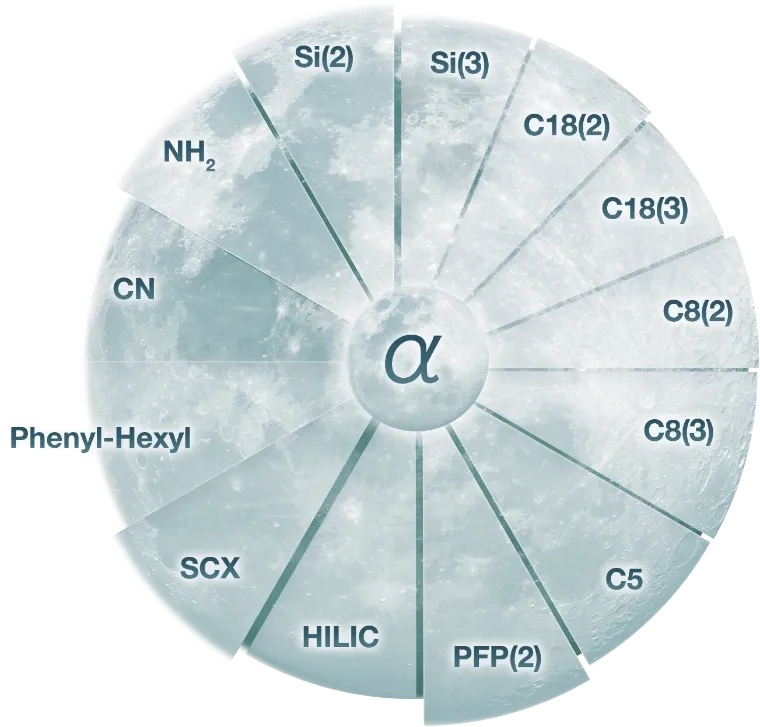
Explore resolution with 13 unique Luna selectivities and find your next selectivity tool. Combined with high surface area the Luna family of columns offers an excellent HPLC performance for a wide range of chromatographic applications.
Explore Successful Separations
Your success begins with our commitment to provide the essential solutions to HPLC separations in the Luna brand. Some of the highest quality and performance standards are incorporated into Luna products, making them an indispensable platform for all areas of HPLC.
Explore Resolution with Luna Selectivities
Phase selectivity has the strongest impact on overall chromatographic resolution. Choosing the optimal selectivity can drive your separation to success. Luna phases span through 10 different chemistries, each offering its own unique selectivity.
Luna Phases – Specifications
Phase | Description | Particle Sizes (µm) | Pore Size (Å) | Surface Area (m²/g) | Carbon Load (%) | pH Stability | Reversed Phase | Normal Phase | HILIC | IEX | USP Column Classification |
|---|---|---|---|---|---|---|---|---|---|---|---|
Silica(2) | Unbonded silica | 3, 5, 10, 10-prep, 15 | 100 | 400 | — | 2.0 - 7.5 | N | Y | Y | N | L3 |
Silica(3) | Unbonded silica | 10-prep | 100 | 400 | — | 2.0 - 7.5 | N | Y | Y | N | L3 |
C5 | 5 Carbon ligand | 5, 10 | 100 | 440 | 12.5 | 1.5 - 9.0* | Y | N | N | N | — |
C8(2) | C8 ligand optimized for improved peak shape | 3, 5, 10, 10-prep, 15 | 100 | 400 | 13.5 | 1.5 - 9.0* | Y | N | N | N | L7 |
C8(3) | C8 ligand optimized for improved peak shape | 10-prep | 100 | 400 | 13 | 1.5 - 9.0* | Y | N | N | N | L7 |
C18(2) | C18 ligand optimized for improved peak shape | 2.5, 3, 5, 10, 10-prep, 15 | 100 | 400 | 17.5 | 1.5 - 9.0* | Y | N | N | N | L1 |
C18(3) | C18 ligand optimized for improved peak shape | 10-prep | 100 | 400 | 17 | 1.5 - 9.0* | Y | N | N | N | L1 |
CN | Versatile CN phase | 3, 5, 10 | 100 | 400 | 7.0 | 1.5 - 7.0 | Y | Y | N | N | L10 |
NH2 | Rugged and reproducible NH2 | 3, 5, 10 | 100 | 400 | 9.5 | 1.5 - 11 | N | Y | Y | Y | L8 |
Phenyl-Hexyl | Phenyl phase attached to C6 (hexyl) ligand | 3, 5, 10, 10-prep, 15 | 100 | 400 | 17.5 | 1.5 - 9.0* | Y | N | N | N | L11 |
SCX | Benzene sulfonic acid | 5, 10 | 100 | 400 | Binding capacity: 0.15 meq/g | 2.0 - 7.0 | N | N | N | Y | L9 |
HILIC | Reproducible, cross-linked diol | 3, 5 | 200 | 200 | 5.7 | 1.5 - 8.0 | N | Y | Y | N | L20 |
PFP(2) | Pentafluorophenyl with a C3 (propyl) linkage | 3, 5 | 100 | 400 | 11.5 | 1.5 - 8.0 | Y | N | N | N | L43 |
* pH range is 1.5 - 9 under gradient conditions. pH range is 1.5 - 10 under isocratic conditions. Y = Yes, N = No
Phases
Luna C18
Fully porous silica bonded with C18
Recommended Use: Separation of hydrophobic compounds
Particle Size: 10 µm, 5 µm, 3 µm
Luna C18-L
Recommended Use: —
Luna C18(2)
Octadecyl silane with ligands bound to the silica surface, resulting in a C18 HPLC column with very hydrophobic stationary phase
Recommended Use: Recommended for improved methylene selectivity for USP methods or general LC method development
Particle Size: 15 µm, 10 µm, 5 µm, 3 µm, 2.5 µm
Luna C5
Fully Porous C5 with TMS endcapping
Recommended Use: Small alkyl chain for minimal hydrophobic retention
Particle Size: 10 µm, 5 µm
Luna C8
Fully porous silica bonded with C8
Recommended Use: C8 HPLC column with hydrophobic stationary phase that offers moderate methylene selectivity
Particle Size: 5 µm, 3 µm
Luna C8(2)
Fully porous C8 with TMS endcapping
Recommended Use: Separation of very hydrophobic compounds
Particle Size: 15 µm, 10 µm, 5 µm, 3 µm
Luna CN
Cyano fully porous silica
Recommended Use: HILIC or normal phase separation of extremely polar compounds or when a cyano phase or L10 is required
Particle Size: 10 µm, 5 µm, 3 µm
Luna CN
Cyano fully porous silica
Recommended Use: HILIC or normal phase separation of extremely polar compounds or when a cyano phase or L10 is required
Particle Size: 5 µm, 3 µm
Luna HILIC
Fully porous diol phase
Recommended Use: Diol phase useful for hydrophilic interaction chromatography mode
Particle Size: 5 µm, 3 µm
Luna NH2
Fully porous silica bonded with amino/aminopropyl
Recommended Use: Amine phase applicable to multiple modes of chromatography and classes of polar compounds
Particle Size: 10 µm, 5 µm, 3 µm
Luna NH2
Fully porous silica bonded with amino/aminopropyl
Recommended Use: Amine phase applicable to multiple modes of chromatography and classes of polar compounds
Particle Size: 5 µm
Luna PFP(2)
Fully porous silica
Recommended Use: Separation of aromatic, halogenated, and closely related compounds
Particle Size: 5 µm, 3 µm
Luna Phenyl-Hexyl
Fully porous hexyl linked phenyl with TMS endcapping
Recommended Use: Separation of aromatic and closely related compounds
Particle Size: 15 µm, 10 µm, 5 µm, 3 µm
Luna Polar Pesticides
Fully porous proprietary polar phase for pesticides
Recommended Use: Underivatized anionic and cationic pesticides in food and environmental matrices
Luna PREP C18(2)
Fully porous large particle and pore size silica bonded with C18 with TMS endcapping
Recommended Use: Large scale separation of hydrophobic compounds
Particle Size: 10 µm
Luna PREP C18(3)
Fully porous large particle and pore size silica bonded with C18 with TMS endcapping
Recommended Use: Large scale separation of hydrophobic compounds
Particle Size: 10 µm
Luna PREP C8(3)
Fully porous large particle and pore size silica bonded with C8
Recommended Use: Large scale separation of very hydrophobic compounds
Particle Size: 10 µm
Luna PREP Phenyl-Hexyl
Fully porous large particle and pore size silica bonded with hexyl linked phenyl with TMS endcapping
Recommended Use: Large scale separation of aromatic and closely related compounds
Particle Size: 10 µm
Luna PREP Polar-RP
Fully porous large particle and pore size silica bonded with proprietary polar chemistry
Recommended Use: Large scale separation of very polar compounds
Particle Size: 10 µm
Luna PREP Silica(2)
Fully porous large particle silica
Recommended Use: Large scale separation of polar compounds such as small organic molecules, steroids, nutraceuticals, fat soluble vitamins, tocopherols
Particle Size: 10 µm
Luna PREP Silica(3)
Fully porous large particle silica
Recommended Use: Large scale separation of polar compounds such as small organic molecules, steroids, nutraceuticals, fat soluble vitamins, tocopherols
Particle Size: 10 µm
Luna SCX
Fully porous benzene sulfonic acid
Recommended Use: Strong cation exchange for positively charged compounds
Particle Size: 10 µm, 5 µm
Luna Si(2)
Recommended Use: —
Particle Size: 5 µm
Luna Silica(2)
Fully porous silica
Recommended Use: Ultra-pure, metal-free silica particle that offers great polar selectivity.
Particle Size: 15 µm, 10 µm, 5 µm, 3 µm
Documents
- Brochure: PFAS Certified Reference Material - US & EU
- Guide: 2026 Product Catalog
- Technical Note: Lovastatin USP Monograph
- Technical Note: Ibuprofen USP Monograph
- Technical Note: Metformin Hydrochloride USP Monograph
- Brochure: Vitamin Testing Solutions Brochure
- Guide: HPLC Troubleshooting - Peak Issues
- Guide: HPLC Troubleshooting - Baseline Issues
- Guide: HPLC Troubleshooting - Pressure Issues
- Guide: HPLC Troubleshooting - Leak Issues
- Guide: PFAS Complete Testing Guide
- Guide: HPLC Column Care Guide
Webinars
- HPLC System Optimization
- Column Quest: Finding Your Ideal C18 Match
- Column Selectivity Screening for Vitamin K Compounds
- How to Take Care of your LC Column
- Optimizing Bioanalytical LC Methods
- Liquid Chromatography Q&A Symposium
FAQs
What is chromatography?
Chromatography is the separation of components in a mixture based on their chemical nature. Chromatography can be performed in either liquid (HPLC) or gas (GC) forms. Liquid chromatography, specifically High Pressure Liquid Chromatography (HPLC), involves a stationary phase (sorbent), a mobile phase (liquid) and the analyte or compounds of interest. Analytes or compounds of interest are injected onto an HPLC column (packed with sorbent that contains a variety of chemistries) in mobile phase. As the mobile phase, which is carrying the analyte or compounds of interest, travels across the stationary phase, the analyte or compounds of interest separate from each other as they interact with the stationary phase, each eluting from the column at various times. Gas chromatography (GC) is similar to HPLC in that is utilized with working analytes or compounds of interest that can be vaporized without decomposing. In GC, gas is used instead of a liquid (like in HPLC). As analytes or compounds of interest travel in the gas mobile phase and interact with the stationary phase, eluting at various times.
What is the shipping solvent for Luna NH2?
Luna NH2 (amino) columns are shipped in 99:1 hexane:acetonitrile. If the column is to be used in reversed phase or HILIC conditions, it is recommended to flush with IPA at low flow rate (10 column volumes) prior to introducing water:acetonitrile or water:methanol mixtures.
Does high pH mobile phase reduce the sensitivity of basic analytes in LC-MS?
Using high pH mobile phase, the retention of polar bases will be increased. Signal response does depend upon ionization state, so if we use high pH, we are actually de-ionizing our bases and should lose sensitivity. But this doesn’t happen actually. When we increase the retention of the polar base analytes using high pH, it elutes later in the gradient run and in a high percentage of organic (acetonitrile or methanol). For example, when using formic acid, the polar base analyte peak is eluting in about 5-10% acetonitrile, but when we switch to pH 10, the polar base analyte peak is coming off in about 30-40% acetonitrile. The increased % of acetonitrile in the source is what allows the ions to be ionized thoroughly, thereby giving you a better response in ESI-MS.
Do phenyl columns suffer from “hydrophobic phase collapse”?
Due to the polar nature of phenyl phases they can be used under 100% aqueous mobile phases without the user being concerned about phase collapse.
How does HILIC chromatography compare to Normal Phase, Reversed Phase, and Ion Chromatography?
Like normal phase HPLC, HILIC employs traditional polar stationary phases such as bare silica, cross-linked diol, amino or cyano, but the mobile phase used is similar to those used in the reversed phase HPLC mode. The components in a HILIC mobile phase are the same as reversed phase, however acetonitrile is the major component and water is the minor component. So, HILIC is also known as an aqueous normal phase. HILIC also allows for the analysis of charged substances, similar to ion chromatography.
Which C18 columns are most appropriate for preparative separations?
Phenomenex has a variety of preparative C18 columns to choose from. If you are looking for a material that can handle large sample volumes then Luna C18(2) would be the best option. Gemini NX-C18 offers extended pH stability for high pH analyses and a different selectivity to Luna C18(2). Kinetex core-shell columns are best suited for those who are looking for high efficiency preparative applications often where closely eluting impurities pose a problem. Kinetex C18 is also fully scalable from UHPLC to Prep so it is perfect for labs that require the same selectivity across multiple particle sizes. Luna Omega Polar C18 and PS C18 offer a different selectivity to more traditional C18 phases and would be ideal for analysts who need a different selectivity or greater retention of polar compounds.
Which columns do you recommend for anion ion exchange?
For many anion exchange applications Luna NH2 will work well. Note that Luna NH2 columns are tested and shipped with hexane, so a solvent switch conditioning step is necessary prior to using for IEC.
What is the recommended cleaning procedure for Luna NH2?
The cleaning procedure for Luna NH2 columns will depend on the separation mode it is being used for. Before starting any kind of cleaning procedure, make sure your in-column solvent or mobile phase is miscible with the recommended cleaning solvents. Also, flow-rates should be 1/5-1/2 of the typical flow-rate. To estimate column volume, use the following equation: V = πr²L (V = column volume in mL, r = column radius in cm, L = column length in cm). See the cleaning protocols below.
NH2 for Normal Phase – rinse with 10 column volumes each of: Chloroform, Isopropanol, Methylene Chloride, Mobile Phase.
NH2 for Reversed Phase – rinse with 10 column volumes each of: 95% Water/5% Acetonitrile (for buffer removal), THF, 95% Acetonitrile/5% Water, Mobile Phase.
NH2 for HILIC or Ion-Exchange* – rinse with 10 column volumes each of: 50/50 Organic (e.g. Acetonitrile or Methanol)/20 mM ammonium bicarbonate pH 10 (to clean ionically bound compounds), Water, Mobile Phase.
*This column cleaning procedure should only be done infrequently, as repeated exposure to high pH solutions can cause silica dissolution, resulting in peak shape issues.
What are the solvents that can be used in HILIC chromatography?
In any form of chromatography, the mobile phase is composed of a weaker and stronger component. In HILIC chromatography, acetonitrile is the weaker component while water is the stronger component. The relative strength of solvents in HILIC mode is as follows: Acetone < Isopropyl alcohol < Acetonitrile < Ethanol < Dioxane < Dimethylformamide = Methanol < Water
What is the pressure stability of the Luna Omega packing material?
Luna Omega 1.6 µm columns are stable to 1000 bar, Luna Omega 5 µm columns are pressure stable to 600 bar.
How can I get a stable baseline from my RI detector?
RI detectors are sensitive to changes in flow rate, mobile phase composition and temperature. Ensure that the reference cell is full of the same mobile phase you are using for the method. Check that your pump is providing a stable flow rate. Finally, if your RI detector has its own temperature control, make sure that it is matched with the mobile phase temperature for the method. It is often advisable to have both the column and detector held at a higher temperature than ambient to ensure that a constant temperature can be maintained.
What changes are allowed to USP / EP gradient HPLC methods?
When using a gradient method, no change may be made to particle size or column dimensions. They must be the same as those directed in the monograph.
Manufacturer information: Luna HPLC Columns – Phenomenex (USA). MAS Brand is the official representative of Phenomenex in Egypt.
Specifications for Luna LC Columns
| Column Phase | C5 or C18(2)-HST or C8 or C8(2) Mercury or CN or Si(2) Mercury or C18 or Polar Pesticides or NH2 or CN Reversed Phase MP or PREP Si(3) or SCX or NH2 Reversed Phase MP or Phenyl Hexyl or C18-L or C8(2) or HILIC or C18(2) or PFP(2) or PS-C18 or Polar-C18 or Silica(2) or PREP C8(3) or PREP C18(2) or PREP C18(3) or Phenyl-Hexyl or PREP Polar-RP or PREP Silica(2) or PREP Silica(3) or PREP Phenyl-Hexyl |
| Column Particle Size | 2.5 or 3 or 5 or 10 or 15 |
| Column Length | 10 or 20 or 30 or 33 or 50 or 75 or 100 or 125 or 150 or 200 or 250 or 300 or N/A |
| Column Internal Diameter | 0.3 or 0.5 or 1 or 2 or 2.1 or 3 or 3.9 or 4 or 4.6 or 7.8 or 10 or 21.2 or 30 or 50 or N/A |
| Column Pore Size | 100 or 200 or 1000 |
| Column Format | MercuryMS or Bulk Media or Analytical or Silver-Loaded or Capillary / Nano or Preparative (AXIA Packed) or Guard (SecurityGuard) |
| Column Option | Standard or AXIA Packed or Capillary or MercuryMS or Normal Phase Solvent or PEEK Hardware or Reversed Phase Solvent or Shipped in Formic Acid or Silver-Loaded or Standard (04G-4448) |
| Manufacturer | Phenomenex |