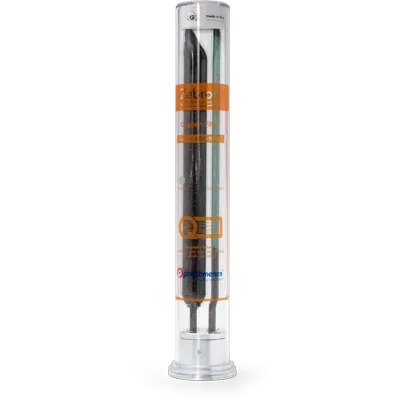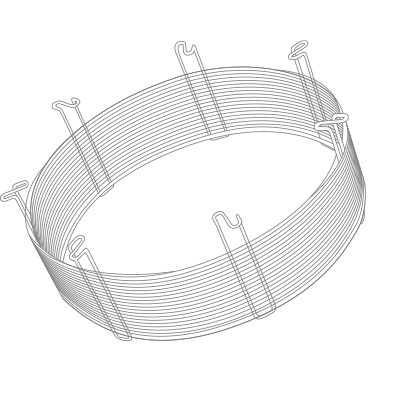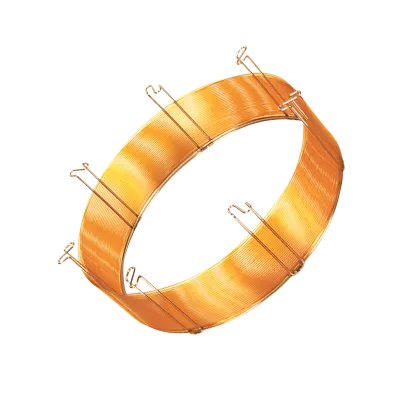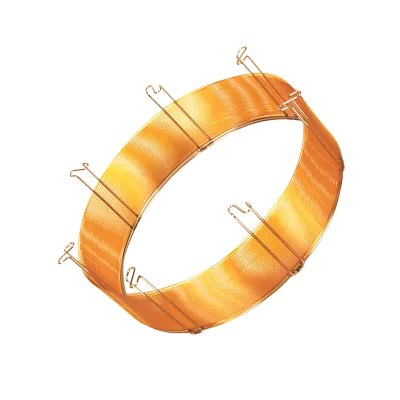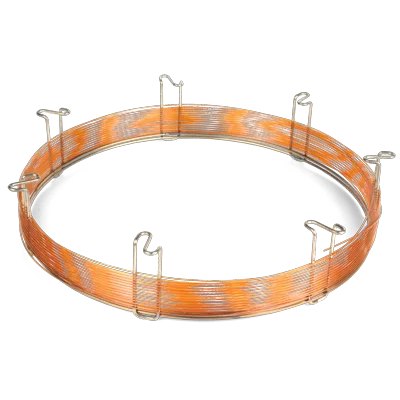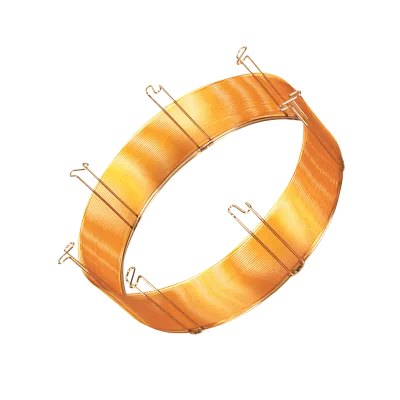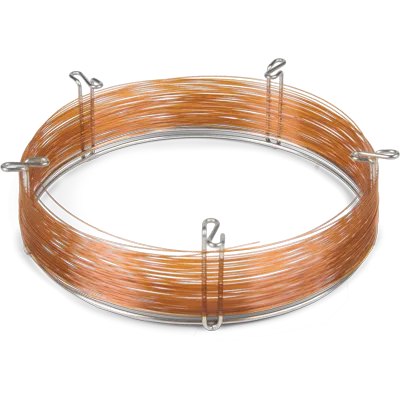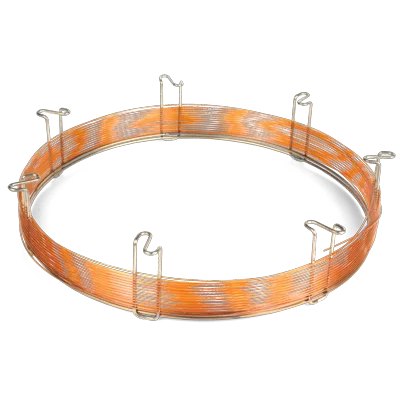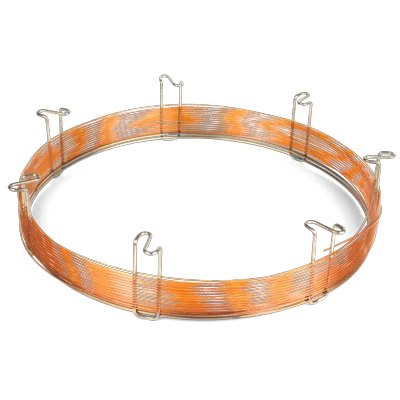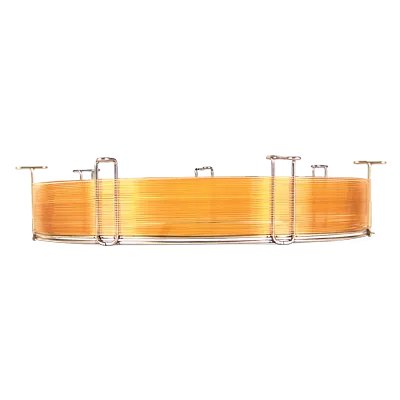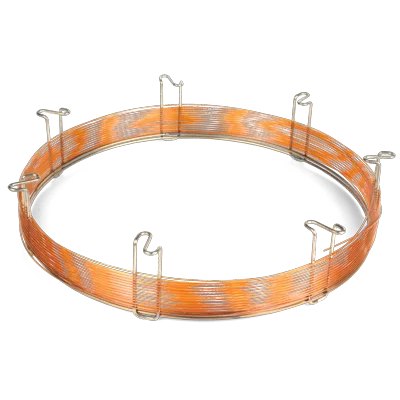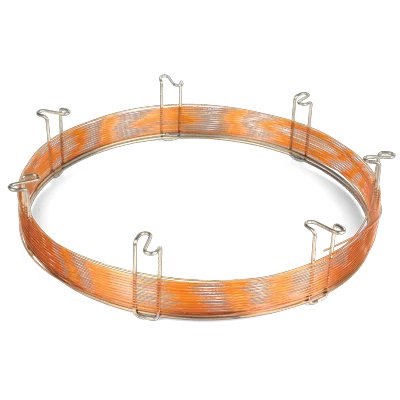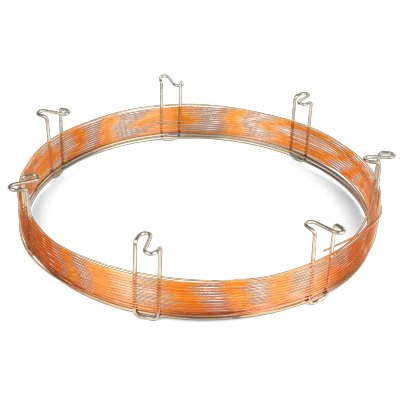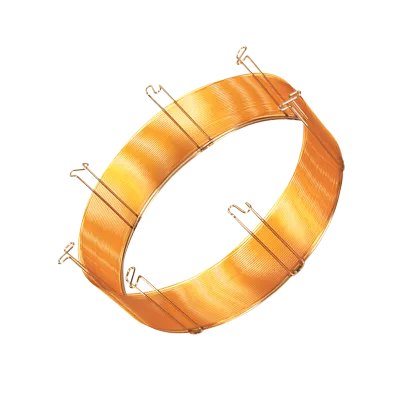
Zebron ZB-CLPesticides-2 GC Columns
Run 7 EPA Methods On One Column Set
Terms and Conditions
30-day money-back guarantee
Shipping: 2-3 Business Days
Zebron ZB-CLPesticides-2 GC Columns
Why Pesticide Labs Are Making The Switch
Drop-In Performance for Chlorinated Pesticides by GC-ECD
- Guaranteed, direct replacement to Restek® Rtx®-CLPesticides columns
- Resolve multiple chlorinated pesticide classes on one pair with enhanced, fine-tuned selectivity
- Meet requirements for 7 EPA methods by GC-ECD (8081, 8082, 8151, 504, 505, 508, and 552)
- Instantly save on every ZB-CLPesticides column and kit with everyday low pricing
Recommended Applications
Dual-column chlorinated pesticides, herbicides, haloacetic acids (HAAs), EPA Methods (8081, 8082, 8151, 504, 505, 508, and 552)
Overview
Upgrade to Zebron from these similar* phases:
Restek® | |
|---|---|
| Rtx-CLPesticides2 | Stx-CLPesticides2 |
Rtx®-CLPesticides | Stx®-CLPesticides |
Run 7 EPA Methods On One Column Set
Zebron ZB-CLPesticides-1 and -2 allow you to run multiple methods without changing columns for faster, easier pesticide analysis. Save time and gain flexibility – run multiple pesticide classes on one instrument, on one column pair.
-
Resolve multiple pesticide classes with enhanced, fine-tuned selectivity
-
Meet dual-column requirements for 7 EPA methods by GC-ECD
- 8081: Chlorinated Pesticides
- 8082: Polychlorinated Biphenyls (PCBs)
- 8151: Chlorinated Herbicides
- 504: EDB, DBCP, and TCP
- 505: Organohalide Pesticides
- 508: Chlorinated Pesticides, Herbicides, and Organohalides
- 552: Haloacetic Acids (HAAs) and Dalapo
*Direct replacement: this category indicates an alternative column which will likely give a similar selectivity.
Direct Replacement for Restek Rtx-CLPesticides Phases
You asked for optimized performance for pesticides by GC/ECD detectors, without time-consuming method development. We’ve delivered a direct replacement*! ZB-CLPesticides-1 and -2 provide guaranteed drop-in performance compared to your current Rtx-CLPesticides column set, without the hassle.
Drop-In Results: Real Customer Data, Real Performance
“ I was able to install the ZB-CLPesticides-1 and ZB-CLPesticides-2 columns as a direct replacement for the Restek Rtx-CLPesticides and Rtx-CLPesticides2 columns that I currently use. I made no changes to the method and saw very little difference between the two columns.“
Joanne Foy, Chemist
TriMatrix Laboratories, Inc.
The opinions stated herein are solely those of the speaker and not necessarily those of any company or organization.
EPA 8081 Chlorinated Pesticides by GC-ECD
Drop-In Method Performance
ZB-CLPesticides columns combine Zebron high quality with drop-in selectivity. Achieve near-exact elution profiles and run times, without the time-consuming method development and headaches typical of traditional selectivities!
Column: | As listed |
Dimension: | As listed |
Part No.: | |
Injection: | Splitless (hold 0.3 min) @ 250 °C, 1 µL |
Carrier Gas: | Helium @ 3.9 mL/min (constant flow) |
Oven Program: | 120 °C to 200 °C @ 45 °C/min to 230 °C @ 15 °C/min to 330 °C @ 30 °C/min for 2 min |
Detector: | ECD @ 330 °C |
Y-Connector: | AG0-4717 (Fused Quartz) |
Guard Column: | 7AM-G000-00-GZ0 (5 m Z-Guard™) |
Liner: | AG0-8499 (Single Taper with Wool at Bottom) |
Septum: | AG0-4696 (PhenoRed™-400) |
Inlet Seal: | AG0-8620 (Gold-Plated Easy Seal™) |
Sample:
Analytes are 250 ng/mL in hexane.
1. 2,4,5,6-TCMX (Surr)
2. α-BHC
3. γ-BHC
4. β-BHC
5. δ-BHC
6. Heptachlor
7. Aldrin
8. Heptachlor epoxide
9. trans-Chlordane
10. cis-Chlordane
11. 4,4’-DDE
12. Endosulfan I
13. Dieldrin
14. Endrin
15. 4,4’-DDD
16. Endosulfan II
17. 4,4’-DDT
18. Endrin aldehyde
19. Endosulfan sulfate
20. Methoxychlor
21. Endrin ketone
22. Decachlorobiphenyl (Surr)
Easily Meet EPA Specifications
The EPA outlines strict performance requirements for compound linearity, percent relative standard deviation (% RSD), and breakdown of DDT and Endrin. The ZB-CLPesticides column pair meets these guidelines, providing accurate data well-suited for your analysis.
Five-Point Calibration Curve at 5, 15, 25, 100, and 250 ng/mL
Peak No. | Analyte | ZB-CLPesticides-1 % RSD* | ZB-CLPesticides-2 % RSD* | US EPA Specifications |
|---|---|---|---|---|
| 1 | 2,4,5,6-TCMX (Surr) | 3.8 | 3.0 | < 20 |
| 2 | α-BHC | 8.3 | 3.8 | < 20 |
| 3 | γ-BHC | 5.9 | 5.6 | < 20 |
| 4 | β-BHC | 6.9 | 6.9 | < 20 |
| 5 | δ-BHC | 4.9 | 5.7 | < 20 |
| 6 | Heptachlor | 8.0 | 6.5 | < 20 |
| 7 | Aldrin | 4.2 | 2.3 | < 20 |
| 8 | Heptachlor epoxide | 3.8 | 2.3 | < 20 |
| 9 | trans-Chlordane | 4.1 | 3.8 | < 20 |
| 10 | cis-Chlordane | 4.0 | 3.3 | < 20 |
| 11 | 4,4'-DDE | 4.8 | 2.9 | < 20 |
| 12 | Endosulfan I | 6.0 | 2.5 | < 20 |
| 13 | Dieldrin | 7.7 | 4.9 | < 20 |
| 14 | Endrin | 9.4 | 6.6 | < 20 |
| 15 | 4,4'-DDD | 9.2 | 3.6 | < 20 |
| 16 | Endosulfan II | 6.6 | 4.1 | < 20 |
| 17 | Column2 | 11.6 | 6.9 | < 20 |
| 18 | Endrin aldehyde | 8.3 | 7.3 | < 20 |
| 19 | Endosulfan sulfate | 8.0 | 7.1 | < 20 |
| 20 | Methoxychlor | 6.7 | 6.1 | < 20 |
| 21 | Endrin ketone | 6.5 | 7.2 | < 20 |
| 22 | Decachlorobiphenyl (Surr) | 6.7 | 6.6 | < 20 |
Average | 6.6% | 4.9% | < 20 |
*Calculated using response factors as per EPA guidelines
EPA Method 8082 Polychlorinated Biphenyls (PCBs)
Drop-In Method Performance
ZB-CLPesticides columns combine Zebron high quality with drop-in selectivity. Achieve near-exact elution profiles and run times, without the time-consuming method development and headaches typical of traditional selectivities!
Columns: | As listed |
Dimension: | As listed |
Part No.: | |
Injection: | Pulsed Splitless @ 30 psi (hold 20 sec), @ 250 °C, 1 µL |
Carrier Gas: | Helium @ 60 cm/sec (constant flow) |
Oven Program: | 120 °C to 200 °C @ 45 °C/min to 330 °C @ 15 °C/min for 2 min |
Detector: | ECD @ 330 °C |
Y-Connector: | AG0-4717 (Fused Quartz) |
Guard Column: | 7AM-G000-00-GZ0 (5 m Z-Guard™) |
Liner: | AG0-8499 (Single Taper with Wool at Bottom) |
Septum: | AG0-4696 (PhenoRed™-400) |
Inlet Seal: | AG0-8620 (Gold-Plated Easy Seal™) |
Sample:
Aroclor is 1000 ng/mL and SS and IS
are 100 ng/mL in hexane.
1. Tetrachloro-meta-xylene (TCMX)*
2. Decachlorobiphenyl**
* surrogate standard
** internal standard
Improve Pesticide Analysis & Throughput with Phenova® Certified Reference Materials
Keeping You in Calibration
Phenova CRMs provide lot-to-lot consistency by analytically verifying with internal and external CRMs. This means you will experience minimal trending and fewer out of control calibrations.
- Take control
- Extend your calibration window
- Improve your sample throughput
Consistent Quality
Using ISO/IEC 17025 and ISO Guide 34 compliant quality programs, Phenova CRMs are manufactured and analytically verified, promising you consistency and accuracy each time.
- Get accurate results
- Improve your data quality and analysis
Who Needs to Use Certified Reference Materials?
All environmental labs accredited to ISO/IEC 17025 must use CRMs. Even if your lab does not have this accreditation it still benefits from having a high standard, quality product.
Documents
- Guide: GC Troubleshooting Quick Reference Guide
- Guide: Zebron GC Column Selection Chart
- Brochures: Zebron Gas Management Brochure
- Supporting Docs: Zebron Gas Filter User Guide
- Brochures: GC FAQ - Troubleshooting Highlights from Webinar
- Brochures: Advanced Pesticide Testing Using Zebron GC Columns
- Guide: Persistent Organic Pollutants (POPs) by GC
- Brochures: Phenova CRMs for Environmental Analysis Brochure
- Supporting Docs: Zebron Gas Filter Selection Tool
- Brochures: Complete GC Solutions for Pesticides and Semi-Volatiles Testing
- Brochures: Zebron ZB-CLPesticides GC Columns
FAQs
Can I pack or re-pack my GC liner with wool?
Though the upfront cost of self-packing your liner may seem attractive, the time and headaches caused by resulting tailing or irreproducible peaks can be sizeable! Self-packed wool fibers commonly break during installation and any existing deactivation on the liner can also be scratched or damaged. Scratches in the deactivation layer are likely to occur when removing wool from the liner or re-packing it with new wool. Also, when wool is forcefully inserted or removed, these scratches could expose active sites, resulting in peak tailing and poor reproducibility. Pre-packed Zebron PLUS liners undergo the deactivation process with the quartz wool already in place, which ensures that any active sites that form during packing are not exposed. Its novel touchless packaging and preinstalled O-ring prevent contamination during installation.
Does the Zebron PLUS liner with wool improve my GC column lifetime?
Yes. Zebron PLUS liners are packed with quartz wool, which serves two purposes: a) Quartz wool promotes homogenous vaporization of analytes and solvent in the inlet to effectively transfer them to the head of the GC column. b) Quartz wool acts as a filter, trapping non-volatile impurities and preventing them from proceeding further into the GC column.
I work with dirty samples which produce a residue on my GC liner after approximately 100 injections. Can I scrub/sonicate my liner and reuse it?
It is not recommended to scrub/sonicate your liners. Residue formation indicates contamination. More specifically, this shows that the sample contains non-volatile impurities, in which case it is recommended to replace your liner rather than clean it. Sonication can alter the liner’s deactivation, and scrubbing can create scratches and active sites. As a result, you can have several chromatography problems such as poor quantitation, analyte breakdown, poor reproducibility, peak asymmetry, etc.
Is there a way I can get immediate help with my current and upcoming method?
Absolutely, we're always here to help! You can easily get in contact with our team members by clicking contact us on the menu or better yet, just head to www.phenomenex.com/chatnow and we'll help you out with method recommendations and tips.
I am using an inert GC column for my analysis, and I still see peak tailing. What could be the reason for this?
For analysis of active compounds, it is crucial to use both a highly inert column and a highly inert liner. The liner is the first place of potential analyte interaction during GC analysis; it is important that your analytes are not adsorbed. Zebron PLUS liners undergo a rigorous deactivation process and are tested for inertness to ensure reliable results when working with highly active compounds such as underivatized acids and active bases.
When facing peak and resolution issues in sample analysis by GC, where is the best place to start?
The inlet is the most common place where problems happen in gas chromatography. This is because: • The inlet is subjected to very high temperatures. • There are multiple consumables involved in the inlet that need routine maintenance. • Some inlet modes, such as splitless injection, are a slow process, meaning that target analytes and the inlet can interact with each other before the sample enters the column.
Can you recommend a GC liner that work best when analyzing dirty samples, samples with wide boiling points, or samples with wide molecular weight?
Analysis of dirty samples, samples with wide boiling points, or samples with wide molecular weights can be enhanced by choosing a Zebron™ PLUS liner with quartz wool. Liners packed with wool can prevent non-volatile compounds from entering the column and improve sample vaporization for a more robust, reproducible analysis.
Manufacturer information: Zebron ZB-CLPesticides-2 GC Columns – Phenomenex (USA). MAS Brand is the official representative of Phenomenex in Egypt.
Specifications for Zebron ZB-CLPesticides-2 GC Columns
| GC Internal Diameter (mm) | 0.25 or 0.32 or 0.53 |
| GC Film Thickness (µm) | 0.2 or 0.25 or 0.42 or 0.5 |
| GC Format | Capillary Column or 5-inch Cage |
| Manufacturer | Phenomenex |
| GC Phase | ZB-CLPesticides-2 |
| GC Length (m) | 30 |
| GC Option | Standard |