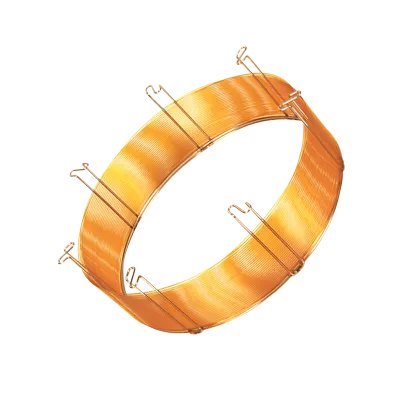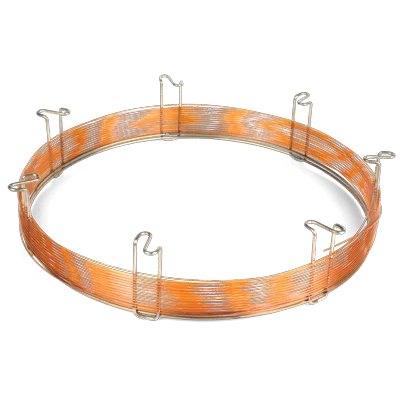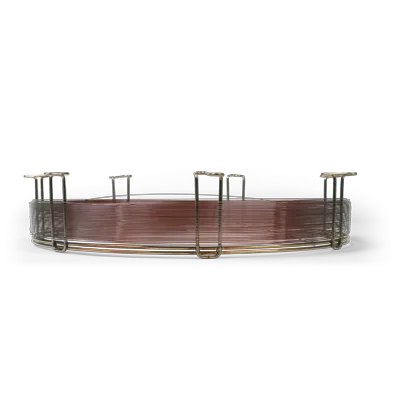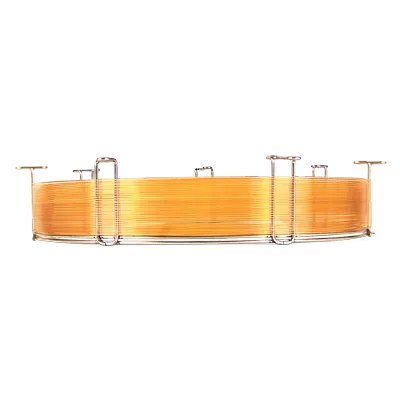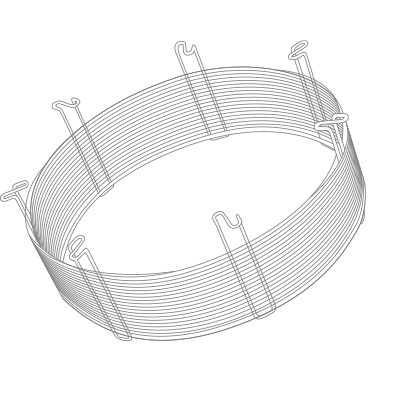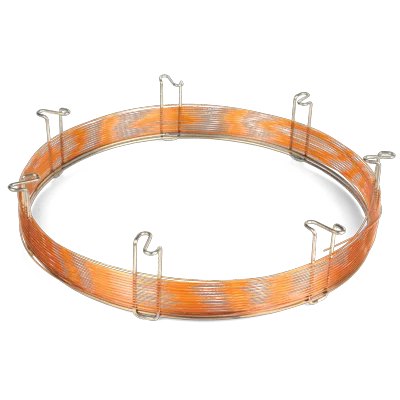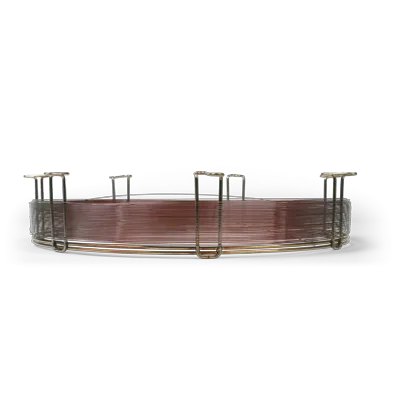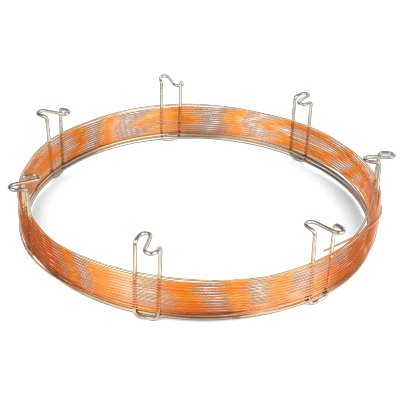
Zebron ZB-1701 GC Columns
Alternate Selectivity for Mid-Polarity Analyses
Terms and Conditions
30-day money-back guarantee
Shipping: 2-3 Business Days
Zebron ZB-1701 GC Columns
Alternate Selectivity for Mid-Polarity Analyses
- Fast run and re equilibration times for enhanced sample throughput and productivity
- Provides alternate selectivity to phenyl phases with similar polarity
- Good peak shape for active analytes
Want an even more rugged alternative for pesticide analysis? See ZB-MutliResidue-1
Testing Endrin and DDT? See ZB-1701P
Overview
Upgrade to Zebron from any 14 % cyanopropylphenyl / 86 % dimethylpolysiloxane phase:
Agilent® | Restek® | SGE® | Supelco® | OV® |
|---|---|---|---|---|
DB®-1701 | Rtx®-1701 | BP10 | SPB®-1701 | OV-1701 |
| CP-Sil 19 CB | Rtx-VMS | Equity®-1701 |
Good Peak Shape for Active Analytes
Aromatic Amines by GC-MS
Column: | Zebron ZB-1701 |
Dimension: | 30 meter x 0.25 mm x 0.25 µm |
Part No.: | |
Injection: | Split 15:1 @ 220 °C, 1 µL |
Oven Program: | 60 °C for 1 min to 110 °C @ 30 °C/min to 135 °C @ 9 °C/min to 260 °C @ 30 °C/min for 2 min |
Detector: | MSD @ 180 °C |
Samples:
Analytes are at 1.58 mg/mL each
1. Piperidine
2. 2-Methylpiperidine
3. Aniline
4. Benzylamine
5. α-Phenylethylamine
6. N-Methylaniline
7. m-Toluidine
8. o-Toluidine
9. N,N-Dimethylaniline
10. β-Phenylethylamine
11. N-Ethylaniline
12. 2,4-Dimethylaniline
13. N,N-Diethylaniline
14. Dibenzylamine
Orthogonal Selectivity for Separation
Oxygenated Compounds and Hydrocarbons in Alternative Fuels by Two Dimensional Gas Chromatography using Zebron ZB-1701 and ZB-1 GC Columns
Column 1: | Zebron ZB-1701 |
Phase: | 14 % Cyanopropylphenyl 86 % Dimethylpolysiloxane |
Dimension: | 30 meter x 0.25 mm x 0.25 μm |
Part No.: | |
Column 2: | Zebron ZB-1 |
Phase: | 100 % Dimethylpolysiloxane |
Dimension: | 1.5 meter x 0.1 mm x 0.10 μm |
Part No.: | 7TB-G031-02-C (2 meter trim to 1.5 meter) |
Sample: | Coal-derived Oil |
Injection: | Split 100:1 @ 250 °C, 0.5 μL |
Recommended Linear: | Zebron PLUS Straight Z-Liner™ |
Part No.: | |
Instrument: | Leco Pegasus 3, Agilent 6890N |
Carrier Gas: | Helium @ 1.5 mL/min (Constant Flow Mode) |
Oven Program: | 50 °C for 0.3 min, to 300 °C at 2 °C/min |
Modulation: | Dual Jet Cryogenic, Liquid Nitrogen |
Modulation Period: | 7 seconds |
Detection: | Flame Ionization (FID) @ 370 °C |
Hydrogen: | 30 mL/min |
Air Flow: | 400 mL/min |
Two-dimension contour plot of a coal-derived liquid using GC×GC. The configuration
The results are P for Paraffins, N for Naphthenes, 1A for Mono-aromatics, 2A for Di-Aromatics, 3A for Tri-aromatics, and O for Oxygenated compounds
Three-dimension plot of a coal-derived middle distillate using GC×GC. ZB-1701 x ZB-1
The results are P for Paraffins, N for Naphthenes, 1A for Mono-aromatics, 2A for Di-Aromatics, 3A for Tri-aromatics, and O for Oxygenated compounds
Conclusion
The analysis results obtained using Zebron ZB-1701 and ZB-1 GC columns together enabled the GC×GC-FID system to unravel molecular structures of oxygenated compounds in a coal-derived middle distillate. It also shows that the oxygenated structures mainly consist of phenolic compounds, and this characterization is crucial to help convert coal-derived oils into alternative fuels.
This study showed that compared to conventional configurations, a reversed configuration involving a highly polar column in the first dimension and a non-polar one in the second enables the separation of oxygenates and hydrocarbons in one single run. In fact, the 2D contour plots obtained under these conditions exhibit a good resolution and a high space occupation. Nevertheless, in the future there is still an opportunity to separate the nitrogenates from the oxygenates for improved quantification. Further study is needed utilizing either sample preparation or online fractionation in a multi-technical analytical approach with multi-dimensional gas chromatography.
Acknowledgement: This study was run at IFPEN, and we thank them for their collaboration on this project. Phenomenex is not affiliated with IFPEN.
Documents
- Guide: GC Troubleshooting Quick Reference Guide
- Brochures: Zebron Gas Management Brochure
- Supporting Docs: Zebron Gas Filter Selection Tool
- Supporting Docs: Zebron Gas Filter User Guide
- Brochures: Chemical Industry LC & GC Separation Solutions Guide
- Supporting Docs: Zebron Essentials Phases
- Brochures: Phenova CRMs for Environmental Analysis Brochure
- Brochures: Zebron Essentials Brochure
- Guide: Zebron GC Column Selection Chart
FAQs
Can I pack or re-pack my GC liner with wool?
Though the upfront cost of self-packing your liner may seem attractive, the time and headaches caused by resulting tailing or irreproducible peaks can be sizeable! Self-packed wool fibers commonly break during installation and any existing deactivation on the liner can also be scratched or damaged. Scratches in the deactivation layer are likely to occur when removing wool from the liner or re-packing it with new wool. Also, when wool is forcefully inserted or removed, these scratches could expose active sites, resulting in peak tailing and poor reproducibility. Pre-packed Zebron PLUS liners undergo the deactivation process with the quartz wool already in place, which ensures that any active sites that form during packing are not exposed. Its novel touchless packaging and preinstalled O-ring prevent contamination during installation.
Does the Zebron PLUS liner with wool improve my GC column lifetime?
Yes. Zebron PLUS liners are packed with quartz wool, which serves two purposes: a) Quartz wool promotes homogenous vaporization of analytes and solvent in the inlet to effectively transfer them to the head of the GC column. b) Quartz wool acts as a filter, trapping non-volatile impurities and preventing them from proceeding further into the GC column.
I work with dirty samples which produce a residue on my GC liner after approximately 100 injections. Can I scrub/sonicate my liner and reuse it?
It is not recommended to scrub/sonicate your liners. Residue formation indicates contamination. More specifically, this shows that the sample contains non-volatile impurities, in which case it is recommended to replace your liner rather than clean it. Sonication can alter the liner’s deactivation, and scrubbing can create scratches and active sites. As a result, you can have several chromatography problems such as poor quantitation, analyte breakdown, poor reproducibility, peak asymmetry, etc.
Is there a way I can get immediate help with my current and upcoming method?
Absolutely, we're always here to help! You can easily get in contact with our team members by clicking contact us on the menu or better yet, just head to www.phenomenex.com/chatnow and we'll help you out with method recommendations and tips.
I am using an inert GC column for my analysis, and I still see peak tailing. What could be the reason for this?
For analysis of active compounds, it is crucial to use both a highly inert column and a highly inert liner. The liner is the first place of potential analyte interaction during GC analysis; it is important that your analytes are not adsorbed. Zebron PLUS liners undergo a rigorous deactivation process and are tested for inertness to ensure reliable results when working with highly active compounds such as underivatized acids and active bases.
When facing peak and resolution issues in sample analysis by GC, where is the best place to start?
The inlet is the most common place where problems happen in gas chromatography. This is because: • The inlet is subjected to very high temperatures. • There are multiple consumables involved in the inlet that need routine maintenance. • Some inlet modes, such as splitless injection, are a slow process, meaning that target analytes and the inlet can interact with each other before the sample enters the column.
Can you recommend a GC liner that work best when analyzing dirty samples, samples with wide boiling points, or samples with wide molecular weight?
Analysis of dirty samples, samples with wide boiling points, or samples with wide molecular weights can be enhanced by choosing a Zebron™ PLUS liner with quartz wool. Liners packed with wool can prevent non-volatile compounds from entering the column and improve sample vaporization for a more robust, reproducible analysis.
Manufacturer information: Zebron ZB-1701 GC Columns – Phenomenex (USA). MAS Brand is the official representative of Phenomenex in Egypt.
Specifications for Zebron ZB-1701 GC Columns
| GC Length (m) | 1 or 1.5 or 10 or 15 or 25 or 30 or 60 |
| GC Internal Diameter (mm) | 0.1 or 0.18 or 0.25 or 0.32 or 0.53 |
| GC Film Thickness (µm) | 0.05 or 0.1 or 0.15 or 0.18 or 0.25 or 0.3 or 0.5 or 1 or 2 |
| GC Format | Capillary Column or 5-inch Cage |
| GC Option | Standard or Custom |
| Manufacturer | Phenomenex |
| GC Phase | ZB-1701 |