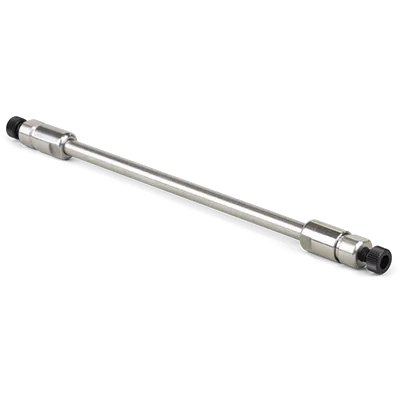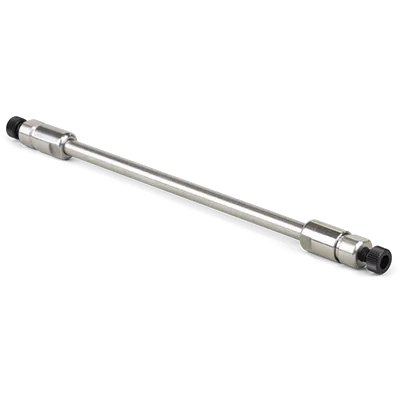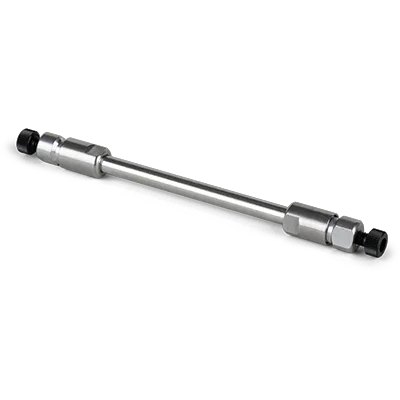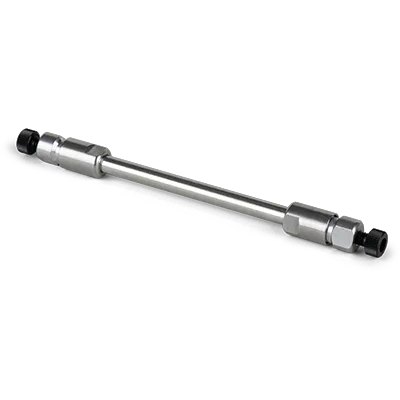
Kinetex LC Columns
ميزة تقنية Core-Shell
الشروط والأحكام
30-day money-back guarantee
Shipping: 2-3 Business Days
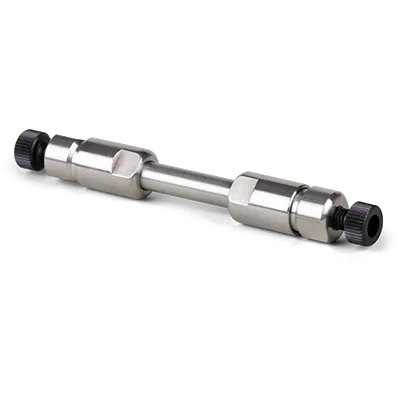
Kinetex Core-Shell Technology Columns
The Core-Shell Advantage
تقدّم تقنية Kinetex Core-Shell تحسينات كبيرة في الكفاءة مقارنة بالأوساط التقليدية كاملة المسامية، ويمكن الاستفادة منها لزيادة الدقة وتحسين الإنتاجية بشكل ملحوظ وتقليل استهلاك المذيبات وخفض التكاليف. سواء كنت تشغّل طرق HPLC أو UHPLC، تقدّم عائلة Kinetex أداءً أفضل بكثير من العمود الذي تستخدمه حاليًا. تصمّم Phenomenex وتصنّع وتبيع جسيمات السيليكا والسيليكا العضوية Core-Shell الخاصة بها. مزايا أعمدة Kinetex HPLC:
| Separation technique | HILIC / Reversed Phase (RP) |
|---|---|
| Application | Small Molecule Analysis |
| Pore size | 100 Å |
| Particle size | 1.3 µm, 1.7 µm, 2.6 µm, 3.5 µm, 5 µm |
| Phases available | 14 |
| Catalogue codes | 413 |
نظرة عامة
How Does Core-Shell Technology Work?
Core-shell technology in chromatography is a revolutionary approach that enhances the efficiency of HPLC systems while minimizing costs. Core-shell particles are designed with a solid, non-porous silica core surrounded by a porous outer layer. This unique structure allows for faster analyte mass transfer between the mobile and stationary phases, as diffusion occurs only through the thin, porous shell rather than the entire particle. This minimizes band broadening, leading to higher separation efficiency and sharper peaks.
The consistency in size and shape of core-shell particles further enhances separation efficiency by reducing variability in analyte movement. As a result, core-shell HPLC columns provide high efficiency and resolution at lower backpressures, making them an ideal choice for labs looking to improve their existing HPLC systems without the need for costly UHPLC equipment.
Core-shell technology thus offers a cost-effective alternative to upgrading to UHPLC systems, enabling labs to maximize the efficiency of their current HPLC setups. The formation of these particles through advanced sol-gel processing techniques ensures uniformity and reliability, making them a valuable tool in modern chromatography. By using the Kinetex HPLC column, laboratories can achieve faster analysis times and higher productivity while maintaining excellent separation performance.
Kinetex Core-Shell Performance on Any LC System
The 5 versatile particle sizes allow you to select the best fit for your instrument.
UHPLC
UHPLC
UHPLC/HPLC
HPLC
HPLC/PREP
Particle Chemistry
Using sol-gel processing techniques that incorporate nano-structuring technology, a durable, homogeneous porous shell is grown on a solid silica core to create a Kinetex Core-Shell particle. This particle morphology results in less band broadening for all four sources of UHPLC band broadening compared to fully porous particles and thus delivers extremely high efficiencies.
- Optimized for Ultra-High Performance
- Superior Core-Shell Quality
- Core-Shell Scalability and Portability
Kinetex particles are characterized by an exceptionally consistent size distribution, with particles being nearly monodispersed, meaning they are uniform in size. This precise uniformity plays a crucial role in minimizing variability within the column, leading to enhanced separation efficiency and sharper peaks.
The nearly monodispersed nature of these particles ensures that the flow of the mobile phase remains consistent, reducing the likelihood of irregularities that can impact results. As a result, Kinetex columns deliver highly reliable and reproducible performance, making them ideal for achieving consistent analytical outcomes across various applications.
Kinetex Polar C18
Minimized Band Broadening
Fully Porous
Increased Band Broadening
Expand Your Core-Shell Selectivity Toolbox
Kinetex core-shell particle LC columns deliver exceptional performance enhancements across any LC system, offering unmatched efficiency and resolution. With a choice of 12 diverse stationary phases, these columns cater to a wide range of chromatographic applications, ensuring optimal separation for various analytes.
Additionally, the availability of five versatile particle sizes allows for precise method tailoring, enabling both high-speed and high-resolution separations. Whether you're using HPLC or UHPLC systems, Kinetex columns provide the flexibility and performance needed to achieve superior analytical results.
| Kinetex Phases | Shipping Solvent | Particle Sizes (µm) | Pore Size (Å) | Surface Area (m2/g) | Carbon Load (%) | pH Stability | Reversed Phase | Normal Phase | HILIC | 100% Aqueous Stable |
|---|---|---|---|---|---|---|---|---|---|---|
| Acetonitrile /100 mM Ammonium Formate pH 3.2 (90:10) | 2.6 | 100 | 200 | N/A | 2-7.5 | N | N | Y | Y | |
| Acetonitrile / Water (50:50) | 2.6 | 100 | 200 | 9 | 1.5-8.5* | Y | N | N | Y | |
| Acetonitrile / Water (50:50) | 2.6 | 100 | 200 | 9 | 1.5-8.5* | Y | N | N | Y | |
| Acetonitrile / Water (50:50) | 1.3, 1.7, 2.6, 5 | 100 | 200 | 12 | 1.5-8.5* | Y | N | N | N | |
| Acetonitrile / Water (45:55) | 1.7, 2.6, 5 | 100 | 200 | 11 | 1-12 | Y | N | N | Y | |
| Acetonitrile / Water (50:50) | 1.7, 2.6, 3.5, 5 | 100 | 200 | 10 | 1.5-8.5* | Y | N | N | N | |
| Acetonitrile / Water (45:55) | 1.7, 2.6, 5 | 100 | 200 | 8 | 1.5-8.5* | Y | N | N | N | |
| Acetonitrile/Water w/0.1 % Formic Acid (50:50) | 1.7, 2.6, 5 | 100 | 200 | 11 | 1.5-8.5* | Y | N | N | Y | |
| Acetonitrile / Water (45:55) | 1.7, 2.6, 5 | 100 | 200 | 11 | 1.5-8.5* | Y | N | N | N | |
| Acetonitrile / Water (40:60) | 1.7, 2.6, 5 | 100 | 200 | 9 | 1.5-8.5* | Y | N | N | Y | |
| Acetonitrile /100 mM Ammonium Formate (93:7) | 2.6 | 100 | 200 | 0 | 2.0-7.5 | N | Y | Y | N | |
| Acetonitrile / Water (65:35) | 3.5 | — | — | 12 | 1.5-8.5* | Y | N | N | N |
† Shipping conditions may vary slightly in terms of organic to aqueous ratio, depending on column dimensions. * pH stability under gradient conditions. pH stability is 1.5-10 under isocratic conditions.
****
Y=Yes
N=No
Core-shell vs Fully Porous
High-Efficiency‚ High-Density Particle
The combination of a consistent, solid, high-density core along with proprietary column packing technologies in the Kinetex HPLC column ensures optimum bed structure and high column performance. This carefully designed core structure promotes uniform packing of the particles, which is essential for minimizing band-broadening effects that can arise from Eddy Diffusion.
The manufacturing process of Kinetex columns is tightly controlled, focusing on factors such as particle size distribution, surface and bonding homogeneity, and packing quality. This meticulous engineering leads to uniform packing and minimized band-broadening, resulting in superior separation efficiency.
Achieve Sub-2 μm Performance within HPLC Backpressure Limitations
Kinetex 2.6 µm C18
Traditional 1.7 µm C18
50 x 2.1 mm
Detection:UV @ 254 nm
Temperature:25 °C
Flow Rate:0.6 mL/min
Mobile Phase:Acetonitrile / Water (50:50)
Sample:0.5 µL test mixture
- Acetophenone
- Benzene
- Toluene
- Naphthalene
Uniform Particle Size Distribution
Every step in the manufacturing process of Kinetex Core-Shell columns is tightly controlled for:
- Surface and bonding homogeneity
- Selectivity quality control testing
- Inertness of the base silica
- Packing quality and consistency
Batch-to-Batch Reproducibility Overlay
Kinetex 2.6 µm C18
Part No:Dimension:
50 x 4.6 mm
Mobile Phase:Water / Acetonitrile (65:35)
Temperature:25 °C
Detection:UV @ 254 nm
Flow Rate:1.0 mL/min
Sample:- Uracil
- Hydrocortisone
- Cortisone
- Cortisone Acetate
- 17-Hydroxyprogesterone
Comparative separations may not be representative of all applications.
Top 5 Pros of Kinetex Core-Shell Technology
- Productivity: Kinetex Core-Shell Technology significantly enhances method productivity with minimal effort. By simply replacing traditional, fully porous columns with Kinetex HPLC columns, users can achieve better resolution, sensitivity, and overall productivity without extensive method redevelopment. This easy switch allows for immediate improvements in chromatographic performance, making it a cost-effective upgrade to existing methods.
- PortabilityThe Kinetex Core-Shell columns are available in a range of particle sizes (1.3 µm to 5 µm), which ensures method portability across different HPLC and UHPLC systems. This scalability allows for consistent retention and selectivity across various particle sizes while accommodating different backpressure levels, making it easier to transfer methods between instruments.
- Performance Kinetex Core-Shell Technology delivers superior chromatographic efficiency compared to fully porous particles. This efficiency boost enables chromatographers to maximize the performance of their HPLC/UHPLC systems, ensuring optimal results with higher resolution and sharper peaks, even under similar method conditions.
- Phases With 11 unique phase selectivities available, Kinetex Core-Shell Technology offers unmatched versatility for method development. This wide selection of phase chemistries allows for tailored separations and simplified optimization, ensuring the best possible results for a wide range of applications.
- Pressure Kinetex Core-Shell columns provide higher efficiency at lower system backpressures compared to fully porous columns. This allows users to achieve superior chromatographic performance on conventional LC instruments without the need for ultra-high-pressure systems, making it a practical choice for routine analyses.
الفازات
Kinetex Amide
Recommended Use: Enhanced separation of small polar compounds by HILIC or reversed phase modes
Kinetex Biphenyl
Core-shell with bonded biphenyl phase
Recommended Use: 100 % aqueous stable reversed phase chemistry with hydrophobic, aromatic, and enhanced polar selectivity
Particle Size: 5 µm, 2.6 µm, 1.7 µm
Kinetex C18
Core-shell with bonded C18 phase
Recommended Use: All-purpose hydrophobic retention and methylene selectivity
Particle Size: 5 µm, 2.6 µm, 1.7 µm, 1.3 µm
Kinetex C8
Core-shell with bonded C8 phase
Recommended Use: Minimized hydrophobic retention for highly hydrophobic compounds
Particle Size: 5 µm, 2.6 µm, 1.7 µm
Kinetex EVO C18
Organo-silica core-shell with bonded C18 phase, resistant to extreme pHs
Recommended Use: High pH stability from 1-12 to deliver robust methods and improved peak shape for bases
Particle Size: 5 µm, 2.6 µm, 1.7 µm
Kinetex F5
Core-shell with bonded pentafluorophenylpropyl phase
Recommended Use: Highly reproducible pentafluorophenylpropyl phase, exceptional for halogenated, conjugated, isomeric, or highly polar compounds.
Particle Size: 5 µm, 2.6 µm, 1.7 µm
Kinetex HILIC
Unbonded core-shell silica
Recommended Use: Retention and separation of polar compounds hydrophilic interaction chromatography conditions
Particle Size: 5 µm, 2.6 µm, 1.7 µm
Kinetex No Phase
Recommended Use: —
Particle Size: 5 µm, 2.6 µm
Kinetex PAH
Core-shell with polymerically bonded C18 phase
Recommended Use: Polymerically bonded C18 phase specifically developed for the separation of EU and EPA priority PAHs.
Particle Size: 3.5 µm
Kinetex PFP
Core-shell bonded with pentafluorophenyl with TMS endcapping
Recommended Use: Ultra-high performance on UHPLC systems for aromatic and halogenated compounds
Particle Size: 5 µm, 2.6 µm, 1.7 µm
Kinetex Phenyl-Hexyl
Core-shell with bonded phenyl-hexyl phase
Recommended Use: Greater retention and separation of aromatic compounds
Particle Size: 5 µm, 2.6 µm, 1.7 µm
Kinetex Polar C18
Core-shell with polymerically bonded C18 phase
Recommended Use: Combined C18 and polar modified surface that provides polar and non-polar retention alongside 100% aqueous stability
Particle Size: 2.6 µm
Kinetex PS C18
Core-shell with bonded C18 and positive surface charge
Recommended Use: A multi-modal, 100 % aqueous C18 column with a positive surface modification that demonstrates unique selectivity and improved peak shape for basic compounds.
Particle Size: 2.6 µm
Kinetex XB-C18
Core-shell with bonded C18 phase protective butyl side chains
Recommended Use: Superior peak shape and enhanced separation of basic compounds under neutral and acidic conditions
Particle Size: 5 µm, 3.5 µm, 2.6 µm, 1.7 µm
المستندات
- Brochures: Kinetex F5
- Brochures: Mycotoxins Analysis
- Brochures: PFAS Certified Reference Materials
- Technical Notes: Micro-flow Peptide Separations
- Guide: System Optimization Manual
- Guide: HPLC Troubleshooting Guide
- Technical Notes: Lovastatin USP Monograph
- Technical Notes: Ibuprofen Tablet USP Dissolution: A Rapid HPLC Alternative to the Traditional UV Method (TN-1248)
- Brochures: HPLC/UHPLC Reference Tool
- Brochures: Kinetex LC Phase Selection Guide
- Supporting Docs: Kinetex Column Selectivity Poster
- Brochures: Kinetex Biphenyl Brochure
الأسئلة الشائعة
What is chromatography?
الكروماتوجرافيا هي فصل مكونات خليط حسب طبيعتها الكيميائية، ويمكن إجراؤها في صورة سائلة (HPLC) أو غازية (GC). تتضمن كروماتوجرافيا السوائل، وتحديدًا كروماتوجرافيا السوائل عالية الضغط (HPLC)، طورًا ثابتًا (مادة ماصة) وطورًا متحركًا (سائل) والمادة أو المركبات المراد تحليلها. تُحقن المواد المراد تحليلها في عمود HPLC (معبأ بمادة ماصة ذات كيمياء متنوعة) داخل الطور المتحرك. وبينما يمر الطور المتحرك حاملًا هذه المواد عبر الطور الثابت، تنفصل عن بعضها بسبب تفاعلها مع الطور الثابت، فتخرج كل منها من العمود في وقت مختلف. وكروماتوجرافيا الغاز (GC) تشبه HPLC لكنها تُستخدم مع المواد التي يمكن تبخيرها دون أن تتحلل، ويُستخدم فيها الغاز بدلًا من السائل. وبينما تنتقل المواد في الطور المتحرك الغازي وتتفاعل مع الطور الثابت، تخرج في أوقات مختلفة.
هل يقلل الطور المتحرك عالي الـ pH حساسية المواد القاعدية في LC-MS؟
باستخدام طور متحرك عالي الـ pH يزيد احتباس القواعد القطبية. تعتمد استجابة الإشارة على حالة التأين، فعند استخدام pH عالٍ نحن نُفقد القواعد تأينها، ويُفترض أن تقل الحساسية. لكن هذا لا يحدث فعليًا: فعندما نزيد احتباس القواعد القطبية باستخدام pH عالٍ، تُشطف لاحقًا في التدرج عند نسبة أعلى من المذيب العضوي (أسيتونيتريل أو ميثانول). فمثلًا، مع حمض الفورميك تُشطف قمة القاعدة القطبية عند حوالي 5-10% أسيتونيتريل، أما عند pH 10 فتخرج عند حوالي 30-40% أسيتونيتريل. وزيادة نسبة الأسيتونيتريل في المصدر هي ما يسمح بتأين الأيونات بالكامل، فتحصل على استجابة أفضل في ESI-MS.
تحولت من عمود كامل المسامية 5 µm إلى عمود Kinetex Core-Shell 2.6 µm لكني أرى انخفاضًا في الحساسية، كيف أتغلب على ذلك؟
عند التحول إلى مادة أعلى كفاءة مثل Kinetex، يجب ضبط معدل المسح في الكاشف ليتناسب مع القمم الأضيق التي يعطيها العمود. معدل مسح 1Hz يعطي نقطة بيانات واحدة في الثانية، وهذا كافٍ لقمة عرضها 20 ثانية حتى لا تظهر قمتها مسطحة. وعند الانتقال إلى وسط أعلى كفاءة بقمم أضيق يجب رفع معدل المسح لتجنب فقدان قمة الذروة، الذي قد يظهر كأنه فقدان في كفاءة القمة.
هل تعاني أعمدة الفينيل من «انهيار الطور الكاره للماء»؟
بسبب الطبيعة القطبية لفازات الفينيل، يمكن استخدامها مع أطوار متحركة مائية 100% دون القلق من انهيار الطور.
كيف تُقارَن كروماتوجرافيا HILIC بالطور العادي والطور العكسي والكروماتوجرافيا الأيونية؟
مثل HPLC بالطور العادي، تستخدم HILIC أطوارًا ثابتة قطبية تقليدية مثل السيليكا غير المعدّلة أو الديول المتشابك أو الأمينو أو السيانو، لكن الطور المتحرك المستخدم يشبه أطوار HPLC بالطور العكسي. فمكونات الطور المتحرك في HILIC هي نفسها في الطور العكسي، لكن الأسيتونيتريل هو المكون الأكبر والماء هو الأصغر. لذلك تُعرف HILIC أيضًا بالطور العادي المائي. كما تسمح HILIC بتحليل المواد المشحونة، مثل الكروماتوجرافيا الأيونية.
عند تحليل القنّب، كيف تمنع الأسيتونيتريل المستخدم في تحليل الفعالية من تلويث هواء المعمل والتداخل مع تحليل المذيبات المتبقية؟
هناك مصادر وحلول كثيرة محتملة: ضع أغطية بفلاتر أو مصائد ماصة على زجاجات الطور المتحرك وأوعية مخلفات المذيبات، ولا تترك بقايا أسيتونيتريل في الماصات، وأجرِ كل عمليات استخلاص الفعالية وتحضير المعايير داخل خزانة الأبخرة، وإذا كنت تستخدم جهاز Triple Quad MS لتحليل المبيدات فلا تُخرج عادم التفريغ من مصدر التأين داخل المعمل.
ما أنسب أعمدة C18 لعمليات الفصل التحضيرية؟
لدى Phenomenex مجموعة متنوعة من أعمدة C18 التحضيرية. إذا كنت تبحث عن مادة تتحمل أحجام عينات كبيرة فإن Luna C18(2) هو الخيار الأفضل. ويقدّم Gemini NX-C18 ثباتًا ممتدًا في الـ pH للتحاليل عند pH عالٍ وانتقائية مختلفة عن Luna C18(2). أما أعمدة Kinetex Core-Shell فهي الأنسب لمن يبحث عن تطبيقات تحضيرية عالية الكفاءة، خصوصًا عندما تكون الشوائب المتقاربة في الشطف مشكلة. كما أن Kinetex C18 قابل للتوسع بالكامل من UHPLC إلى Prep، فهو مثالي للمعامل التي تحتاج نفس الانتقائية عبر أحجام جسيمات متعددة. ويقدّم Luna Omega Polar C18 وPS C18 انتقائية مختلفة عن فازات C18 التقليدية، وهما مثاليان لمن يحتاج انتقائية مختلفة أو احتباسًا أكبر للمركبات القطبية.
ما المذيبات التي يمكن استخدامها في كروماتوجرافيا HILIC؟
في كل أنواع الكروماتوجرافيا يتكون الطور المتحرك من مكون أضعف وآخر أقوى. في HILIC يكون الأسيتونيتريل هو المكون الأضعف والماء هو الأقوى. والترتيب النسبي لقوة المذيبات في نمط HILIC كالتالي: الأسيتون < الأيزوبروبانول < الأسيتونيتريل < الإيثانول < الديوكسان < ثنائي ميثيل الفورماميد = الميثانول < الماء
ما الذي يجب مراعاته عند الاختيار بين Kinetex phenylhexyl وbiphenyl وF5؟
Kinetex phenylhexyl هو الأنسب لفصل المركبات العطرية الكارهة للماء نسبيًا، ويمكن استخدامه كانتقائية بديلة لـ C8 أو C18، فيحتجز المركبات بدرجة مماثلة لـ C8 لكن مع تداخلات pi-pi إضافية تسمح بفصل المتماكبات العطرية الموضعية. أما Kinetex biphenyl فهو أنسب للمركبات العطرية القطبية ويقدّم انتقائية جيدة حسب الشكل. وKinetex F5 هو أكثر فازات الفينيل قطبية، وبسبب طبيعته شديدة القطبية والتداخلات التي يمكن أن يكوّنها مع المواد المحللة فهو أفضل خيار لتحليل المواد شديدة القطبية والمركبات التي تختلف في بنية إلكترونات pi.
ما التغييرات المسموح بها في طرق HPLC المتدرجة الخاصة بـ USP / EP؟
عند استخدام طريقة متدرجة، لا يُسمح بأي تغيير في حجم الجسيمات أو أبعاد العمود، ويجب أن تكون مطابقة لما ورد في الدستور (Monograph).
ما الضغط الخلفي المعتاد لأعمدة Kinetex 5 µm؟
الضغط الخلفي المتوقع من عمود Kinetex Core-Shell يقارب ما يُلاحظ مع عمود معبأ بجسيمات كاملة المسامية بنفس القطر. ويعتمد الضغط الفعلي في أي طريقة على أبعاد العمود ومعدل التدفق وتركيب المذيب، لكنه عادة أقل من 250 بار. وأعمدة Kinetex 5 µm مصمّمة لتحمّل ضغوط حتى 600 بار.
ما سعة التحميل التقريبية لعمود Kinetex 1.3 µm C18؟
كأي عمود، تعتمد سعة تحميل Kinetex 1.3 µm C18 على عدة عوامل: الطبيعة الكيميائية للمادة المحللة (حمضية أو قاعدية أو متعادلة)، وظروف التشغيل (الطور المتحرك ومعدل التدفق ودرجة الحرارة)، والحجم الميت في النظام، وحدود الطريقة نفسها (فقد يعتبر عميل زيادة 10% في عرض القمة غير مقبولة بينما لا يمانع آخر زيادة 40% في الذيل نتيجة التحميل الزائد). وبشكل عام، سعة التحميل لنفس الوسط لا تعتمد على حجم الجسيمات (أي أن وسط 3 µm له نفس سعة وسط 5 µm بنفس المادة الأساسية وكيمياء السطح). لذلك يُتوقع أن تكون سعة Kinetex 1.3 µm مماثلة لأعمدة C18 Core-Shell المشابهة.
Manufacturer information: Kinetex Core-Shell Technology Columns – Phenomenex (USA). MAS Brand is the official representative of Phenomenex in Egypt.
المواصفات Kinetex LC Columns
| Column Phase | C8 أو C18 أو HILIC أو PS-C18 أو Polar-C18 أو Phenyl-Hexyl أو F5 أو PAH أو PFP أو Amide أو XB-C18 أو EVO-C18 أو 5µ HILIC أو Biphenyl |
| Column Particle Size | 1.3 أو 1.7 أو 2.6 أو 3.5 أو 5 أو N/A |
| Column Length | 20 أو 30 أو 50 أو 75 أو 100 أو 150 أو 250 أو N/A |
| Column Internal Diameter | 0.15 أو 0.3 أو 0.5 أو 1 أو 2.1 أو 3 أو 4 أو 4.6 أو 10 أو 21.2 أو 30 أو 50 أو N/A |
| Column Format | MercuryMS أو Bulk Media أو Analytical أو Capillary / Nano أو Preparative (AXIA Packed) |
| Column Option | Standard أو AXIA Packed أو Batch Validation Kit أو Capillary أو MercuryMS أو Microflow أو Shipped in Formic Acid أو Shipped in IPA أو Standard (00B-4462-A0-OE-144) أو Standard (00B-4462-A0-OE) أو Standard (00B-4462-E0-OE1) أو Standard (00B-4475-AN-OE1) أو Standard (00B-4605-E0-OE1) أو Standard (00D-4477-Y0-OE1) |
| Manufacturer | Phenomenex |
| Column Pore Size | 100 |